Food Sources of Nutrients Found in Eye Supplements
Where to find lutein, zeaxanthin, vitamins A, C and E, zinc and copper in everyday foods—and what food-based nutrition can and cannot tell you about eye-health supplements.
In this guide
Food sources of lutein, zeaxanthin, vitamins A, C and E, zinc and copper, with practical meal ideas and evidence limits.
Educational information; evidence and safety limitations are discussed in the article.Can food provide nutrients found in eye supplements?
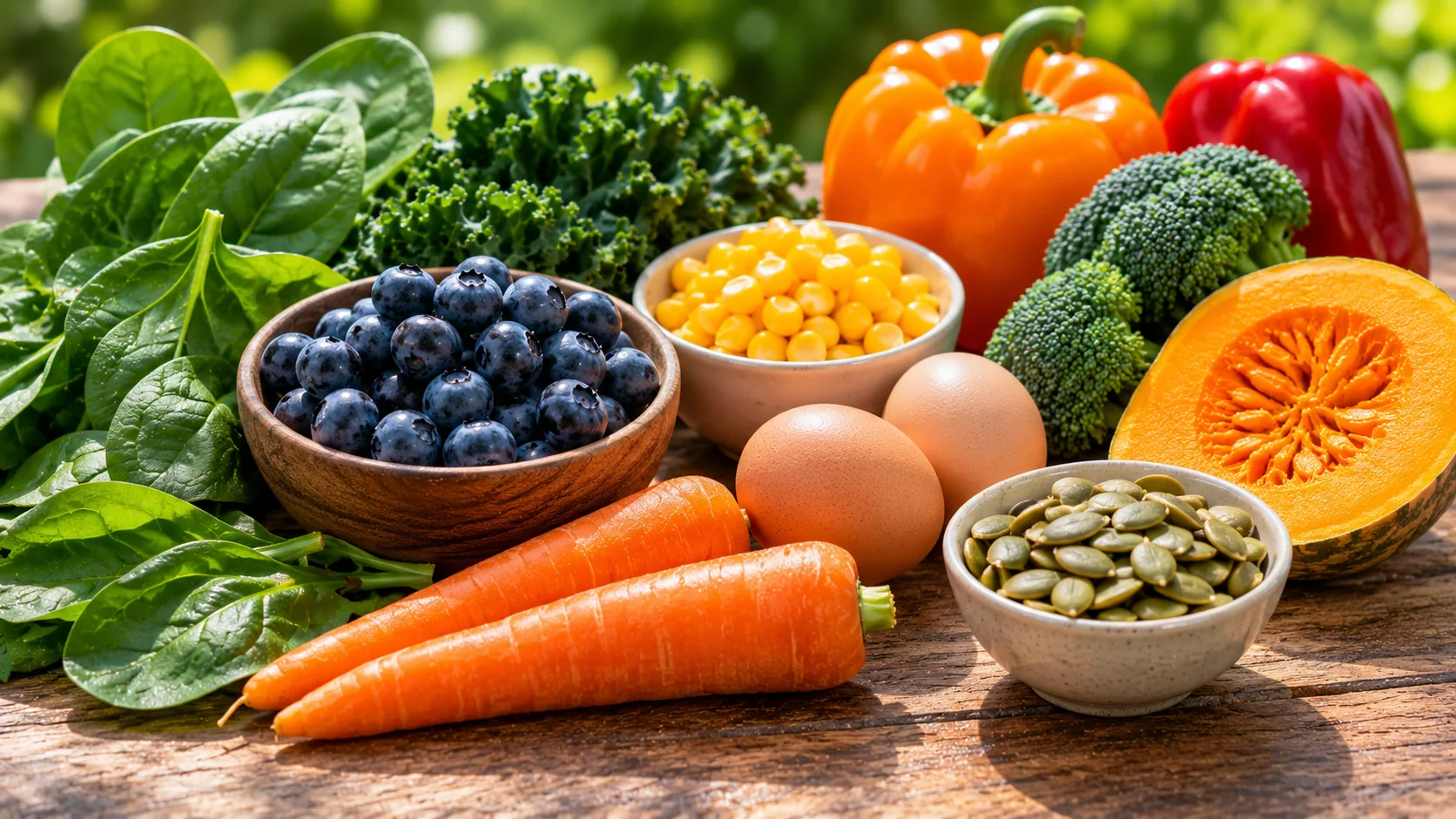
Yes. Many nutrients commonly included in eye-nutrition supplements are present in ordinary foods. Lutein and zeaxanthin occur in dark leafy greens, peas, broccoli and egg yolks. Vitamin C is found in citrus fruit, peppers, kiwi and berries. Vitamin E is present in nuts, seeds and vegetable oils. Zinc comes from seafood, meat, dairy, beans and nuts. Vitamin A comes from animal foods and from plant carotenoids that the body can convert to vitamin A.
A varied eating pattern can help meet normal nutrient needs. It does not mean that food or a general supplement can prevent, reverse or treat every eye condition. The AREDS2 supplement findings apply to particular people with intermediate AMD or certain forms of late AMD; they are not a recommendation for everyone and are not evidence that any commercial eye formula has the same effect. If you have an eye diagnosis, ask your ophthalmologist whether a specific supplement is appropriate.
Food sources of selected eye-related nutrients
| Nutrient | Example food sources | Practical note |
|---|---|---|
| Lutein and zeaxanthin | Kale, spinach, collard greens, corn and orange peppers. | Variety of vegetables helps broaden nutrient intake. |
| Vitamin C | Citrus fruit, kiwi, berries, peppers and broccoli. | Vitamin C is sensitive to storage and cooking conditions. |
| Vitamin E | Nuts, seeds and plant oils. | These foods also provide energy-dense fats. |
| Vitamin A precursors | Carrots, sweet potatoes and dark leafy greens. | Carotenoids are converted to vitamin A in the body. |
| Zinc | Beans, nuts, seeds, dairy, seafood and meat. | Bioavailability differs between plant and animal sources. |
Which foods contain lutein and zeaxanthin?
Lutein and zeaxanthin are carotenoids found in the macula and other tissues. Dark green leafy vegetables are useful food sources because their green chlorophyll masks the yellow-orange color of these carotenoids. Spinach, kale, collard greens, Swiss chard, turnip greens and romaine lettuce are commonly cited choices. Broccoli, peas, Brussels sprouts, corn and asparagus can add variety. Egg yolks also contain these carotenoids, although the amount depends on the hen’s feed and the egg.
You do not need to eat one particular “superfood” every day. Rotate greens and vegetables across meals. Add spinach to an omelet, put kale or romaine in a salad, include broccoli with dinner, or use peas in soups and grain bowls. Frozen vegetables can be practical, nutritious options too. Food composition varies with growing conditions, storage, preparation and serving size, so a list of foods cannot be converted into a precise supplement dose without a reliable nutrient database and portion information.
Lutein and zeaxanthin are fat-soluble. Eating vegetables as part of a meal that contains some fat may support absorption of carotenoids. A small amount of olive oil, avocado, nuts or seeds can make a meal satisfying while adding other nutrients. This is a general food-preparation observation, not a claim that a specific recipe treats macular degeneration.
What are good food sources of vitamin C?
Vitamin C is abundant in many fruits and vegetables. Red and green bell peppers, oranges, grapefruit, kiwi, strawberries, broccoli, Brussels sprouts, tomatoes and cantaloupe are examples. Potatoes also contribute vitamin C in some diets. A mix of fresh, frozen and appropriately stored produce can help provide this nutrient throughout the year.
Vitamin C is water-soluble and can be reduced by prolonged storage and some cooking methods. Cutting vegetables shortly before use, avoiding unnecessarily long storage and using steaming or microwaving instead of prolonged boiling may help retain more. Do not let this become a reason to avoid cooked vegetables: the overall eating pattern matters more than trying to preserve every milligram in every serving.
Vitamin C contributes to normal collagen formation and antioxidant function. Those normal physiological roles should not be exaggerated into claims that eating citrus or taking high-dose vitamin C will cure cataracts, prevent AMD or restore lost vision. Clinical evidence for a particular eye-disease outcome depends on the population, nutrient combination and study design.
Which foods provide vitamin E?
Vitamin E is found in nuts, seeds and certain vegetable oils. Sunflower seeds, almonds, hazelnuts, peanuts, peanut butter, wheat germ, sunflower oil and safflower oil are examples. Avocado and some green vegetables can contribute smaller amounts. Including a handful of nuts or seeds, or using vegetable oils in ordinary cooking, can help add vitamin E to meals.
Vitamin E is fat-soluble and functions as an antioxidant. Food sources are not interchangeable with high-dose vitamin E capsules. Supplements can deliver amounts far above what a person would normally eat, and high doses may interact with medicines or increase bleeding risk in some circumstances. Do not add high-dose vitamin E because a product advertises antioxidant support without first considering your medicines and health history.
How can you get vitamin A from food?
Vitamin A occurs in two broad dietary forms. Preformed vitamin A is found in animal foods such as liver, fish, eggs and dairy products. Provitamin A carotenoids are found in plant foods; the body can convert some of them into vitamin A. Carrots, sweet potatoes, pumpkin, spinach, kale, mango and other orange, yellow or dark green produce contain carotenoids, including beta-carotene.
Vitamin A is essential for normal vision, but more is not automatically better. Very high intake of preformed vitamin A from supplements or certain foods can be harmful. People who are pregnant or may become pregnant should be especially careful with high-dose retinol supplements and liver, which can contain very large amounts. Follow clinician advice rather than using high-dose vitamin A to try to improve eyesight.
Plant carotenoids and preformed vitamin A should not be treated as identical quantities. Conversion from beta-carotene to vitamin A varies between people, and the food matrix and preparation can affect availability. A carrot is a nutritious food, not a measured substitute for a particular amount of retinyl palmitate in a supplement label.
Where can you find zinc and copper in food?
Zinc is present in oysters and other seafood, beef and other meats, poultry, eggs and dairy products. Beans, lentils, nuts, seeds and whole grains also contain zinc. The body generally absorbs zinc more readily from many animal foods than from plant foods because phytates in legumes and grains can bind some zinc. Soaking, fermenting, sprouting and leavening can reduce phytate content in some foods, but individual absorption still varies.
Copper is found in shellfish, nuts, seeds, whole grains, organ meats, cocoa and some legumes. Zinc and copper are both essential minerals. High supplemental zinc intake over time can interfere with copper absorption, which is one reason some high-zinc formulas include copper. That does not establish that every person needs a zinc supplement or that the amount in a particular product is appropriate for them.
If you eat a vegetarian or vegan diet, you can obtain zinc from beans, lentils, tofu, nuts, seeds and whole grains, while paying attention to overall variety and intake. People with restricted diets, digestive conditions or known deficiencies may need individualized advice from a clinician or registered dietitian.
Do fish and omega-3 foods belong in an eye-health diet?
Oily fish such as salmon, sardines, trout, herring and mackerel provide long-chain omega-3 fatty acids. Walnuts, flaxseed, chia seeds and some plant oils provide alpha-linolenic acid, a plant omega-3. These fats are part of a balanced eating pattern, but evidence for omega-3 supplements varies by eye condition and should not be simplified into a promise to prevent dry eye or macular degeneration.
Fish choices should reflect local food-safety advice, pregnancy guidance and mercury considerations. People who are pregnant, breastfeeding or planning pregnancy should follow current public-health advice on lower-mercury seafood choices. Those who do not eat fish can discuss suitable dietary sources or supplements with a healthcare professional if they have a specific nutritional concern.
How can you combine these foods without following a strict eye diet?
A practical approach is to build meals around variety rather than chasing one nutrient. For example, a lunch could include leafy greens, chickpeas, tomatoes, peppers, olive oil and a whole grain. Dinner might combine salmon or beans with broccoli and a sweet potato. Breakfast could include eggs, fruit and a small portion of nuts or seeds. These are examples of balanced meals, not prescribed treatment plans.
For a plant-forward pattern, combine dark leafy vegetables, legumes, nuts, seeds, orange vegetables and fruit across the week. For a mixed diet, include fish, eggs, dairy or lean meats if they suit your preferences and health needs. Frozen and canned vegetables can help reduce cost and preparation time; compare added salt or sauces when relevant. A sustainable pattern that you can maintain is more useful than a complicated list of foods you dislike.
If you have food allergies, kidney disease, diabetes, digestive disease or another condition requiring dietary limits, general food lists may not fit your needs. A registered dietitian can help adapt meals without creating nutrient gaps.
Can food replace an AREDS2 supplement or an iGenics formula?
Food and supplements are not interchangeable in every clinical situation. The National Eye Institute’s AREDS and AREDS2 studies evaluated specific nutrient combinations in people with defined stages of age-related macular degeneration. The findings do not show that everyone should take an AREDS2 product, and they do not establish that an unrelated commercial formula is equivalent. People with intermediate AMD in one or both eyes, or late AMD in one eye, should ask their ophthalmologist whether an AREDS2 formulation is appropriate.
An ordinary varied diet supports general nutrition, but it should not be described as a replacement for a clinician-recommended treatment or supplement regimen. Conversely, a supplement should not be presented as a substitute for vegetables, fruit, appropriate medical care or an eye examination. If you already take an eye formula, bring the full Supplement Facts label to your appointment so the clinician can check overlapping nutrients and possible excessive intake.
For iGenics specifically, the seller label previously reviewed lists several vitamins, minerals and botanical ingredients. That ingredient list does not prove that the finished product prevents or treats an eye disease. It also does not tell us what a person’s diet already supplies. Do not stack iGenics with AREDS2, a multivitamin or separate high-dose nutrients without checking the combined amounts with a qualified healthcare professional.
What should you keep in mind when reading food and eye-health claims?
Food-source lists explain where nutrients occur; they do not by themselves prove that eating a particular food prevents a disease. Observational studies can identify associations between dietary patterns and health outcomes, but they cannot always show that one food caused the outcome. Randomized trials of a defined supplement formula answer a different question. Keep the type of evidence clear when interpreting headlines and marketing.
Be cautious with claims such as “boosts eyesight,” “repairs the retina,” “reverses macular degeneration” or “prevents cataracts.” These statements go beyond what a list of nutrient-rich foods can establish. Sudden vision loss, new flashes or floaters, a curtain-like shadow, severe eye pain or abrupt changes in vision need prompt medical assessment. Do not delay care while changing your diet or trying a supplement.
If you are considering a supplement, review the complete label, serving size, total daily intake from other products, medication interactions and seller return terms. Ask an ophthalmologist, physician or pharmacist when you have an eye diagnosis, take prescription medication, are pregnant, or have a condition that affects nutrient absorption or metabolism.
Food-source comparison table
| Nutrient | Common food sources | Practical note |
|---|---|---|
| Lutein and zeaxanthin | Spinach, kale, collards, romaine, peas, broccoli, corn, egg yolks | Rotate dark leafy greens and other vegetables; amounts vary. |
| Vitamin C | Bell peppers, citrus, kiwi, strawberries, broccoli, Brussels sprouts | Some vitamin C is lost with prolonged storage and cooking. |
| Vitamin E | Sunflower seeds, almonds, hazelnuts, peanuts, vegetable oils | Food sources differ from high-dose supplement capsules. |
| Vitamin A / provitamin A | Liver, eggs, dairy; carrots, sweet potatoes, pumpkin, spinach, mango | Preformed vitamin A and plant carotenoids are not identical. |
| Zinc | Oysters, seafood, meat, poultry, eggs, dairy, beans, nuts | Zinc from plant foods may be less bioavailable due to phytates. |
| Copper | Shellfish, nuts, seeds, whole grains, organ meats, cocoa | High supplemental zinc can interfere with copper absorption. |
| Omega-3 fats | Salmon, sardines, trout, herring; walnuts, flaxseed, chia | Different foods supply different omega-3 fatty acids. |
Use this table as a food-education starting point, not a nutrient prescription. Exact amounts depend on portion size, variety, preparation and individual absorption.
Food sources of selected eye-related nutrients
| Nutrient | Food examples | Practical note |
|---|---|---|
| Lutein and zeaxanthin | Spinach, kale, collards, peas, broccoli, corn and egg yolks. | Amounts vary by variety, serving and preparation. |
| Vitamin C | Peppers, citrus, kiwi, strawberries and broccoli. | Storage and cooking can affect vitamin C content. |
| Vitamin E | Sunflower seeds, almonds, hazelnuts and vegetable oils. | Food sources are not equivalent to high-dose capsules. |
| Vitamin A | Eggs and dairy; carrots, sweet potatoes, pumpkin and leafy greens. | Preformed vitamin A and provitamin A carotenoids differ. |
| Zinc and copper | Seafood, meat, beans, nuts, seeds and whole grains. | Absorption varies; high supplemental zinc can affect copper status. |
Food examples support dietary variety; they are not precise substitutes for a clinical supplement formula.
Food and eye nutrition FAQs
What foods contain lutein and zeaxanthin?
Spinach, kale, collard greens, Swiss chard, romaine, peas, broccoli, corn and egg yolks are common sources. Amounts vary by food and serving.
Are carrots the best food for eyesight?
Carrots provide beta-carotene, which the body can convert to vitamin A, but no single food is best for everyone. A varied diet supplies a broader range of nutrients.
Can spinach replace an eye supplement?
Spinach provides carotenoids and other nutrients, but it is not a clinical substitute for a specific supplement recommended for a person with AMD. Ask your ophthalmologist about your diagnosis and treatment plan.
Which foods are rich in vitamin E?
Sunflower seeds, almonds, hazelnuts, peanuts, wheat germ and some vegetable oils are useful sources of vitamin E.
Do eggs contain lutein and zeaxanthin?
Yes. Egg yolks contain lutein and zeaxanthin, although amounts vary with the hens’ diet and production conditions.
Can food prevent macular degeneration?
A balanced dietary pattern may support general health, but no individual food can be promised to prevent AMD. AREDS2 findings apply to defined AMD groups and a specific supplement formula.
Should I take iGenics with AREDS2?
Do not combine them automatically. Their nutrients may overlap, and the iGenics formula is not established as equivalent to AREDS2. Ask your eye-care professional or pharmacist to review both labels.
Do I need an eye-health diet if I have no vision problems?
A varied, balanced diet is useful for general health at any age. It does not replace routine eye examinations or guarantee that eye disease will not develop.
Primary and professional sources
- American Academy of Ophthalmology: Diet, Nutrition, and Eye Health Supplements
- American Academy of Ophthalmology: Fabulous Foods to Boost Eye Health
- NIH Office of Dietary Supplements: Vitamin C
- NIH Office of Dietary Supplements: Zinc
- NIH Office of Dietary Supplements: Vitamin A and Carotenoids
- NCCIH: Dietary Supplements for Eye Conditions
- National Eye Institute: AREDS and AREDS2
Sources checked November 12, 2026. Product details and seller terms should be independently rechecked before publication.
Related guides
Vitamins and minerals for normal eye function · How to compare eye-nutrition supplements · How to read a Supplement Facts label · Supplements and medication interactions