Vitamins and Minerals for Eye Health: What A, C, E, Zinc and Copper Actually Do
Understand the roles of essential nutrients in normal vision, what the AREDS2 research does and does not show, and how to read an eye-supplement label without confusing nutrient function with a treatment claim.
In this guide
Learn how vitamins A, C and E, zinc and copper support normal eye function, what AREDS2 evidence means, and how to assess supplement labels safely.
Educational information; evidence and safety limitations are discussed in the article.What vitamins and minerals support normal eye function?
Several nutrients have established roles in normal vision and eye tissue function. Vitamin A is essential for the visual cycle and normal function of the cornea and retina. Vitamin C and vitamin E help protect cells from oxidative damage as part of normal antioxidant systems. Zinc participates in vitamin A metabolism and retinal function, while copper is an essential trace mineral and is included in the AREDS2 formula partly to balance high zinc intake.
That does not mean taking more of these nutrients improves eyesight in someone who already gets enough. The evidence for high-dose combinations is condition-specific. The National Eye Institute says the AREDS2 formula can slow progression in people with intermediate AMD, or late AMD in one eye, but it does not prevent AMD from starting and is not a general vision-enhancement supplement. It is not appropriate to assume that any product containing some of the same nutrients has the same evidence.
The provisional iGenics label transcription supplied for this project lists vitamin A 900 mcg, vitamin C 500 mg, vitamin E 0.268 mg, zinc 20 mg and copper 2 mg per two-capsule serving. The supplied seller graphic reads vitamin E as 0.268 mg (2% Daily Value); the current physical package and affiliate-shipped variant have not been authenticated. These amounts also do not match the AREDS2 amounts. Check the current official label and the seller's checkout before relying on any product facts.
Nutrients and normal eye function
| Nutrient | Role in the body | Important context |
|---|---|---|
| Vitamin A | Needed for the visual cycle and normal vision. | Excess preformed vitamin A can be harmful. |
| Vitamin C | An antioxidant nutrient involved in normal tissue function. | Supplement use is not proof of disease prevention. |
| Vitamin E | An antioxidant that helps protect cell membranes. | High supplemental intake may matter for people using blood-thinning medicines. |
| Zinc | Supports many enzymes and normal physiological functions. | High intake can affect copper status; consider total intake. |
| Copper | An essential trace mineral and part of the AREDS2 formulation. | Amount and balance with zinc matter. |
Vitamin A and the visual cycle
Vitamin A is a group of fat-soluble compounds that includes retinol and retinyl esters. The body uses vitamin A to make retinal, a molecule needed by light-sensitive cells in the retina. When light enters the eye, visual pigments change shape and begin a process that allows the nervous system to interpret the signal. Vitamin A is therefore essential to normal vision, especially in low-light conditions.
Vitamin A also supports the normal maintenance of the cornea and conjunctival membranes. Severe deficiency can cause night blindness and, in more advanced cases, xerophthalmia and damage to the surface of the eye. Deficiency is a medical and nutritional problem; it is not evidence that people with normal vitamin A status can improve eyesight by taking extra vitamin A.
Food sources include liver, eggs and dairy products, while orange and dark-green vegetables provide provitamin A carotenoids such as beta-carotene. The body converts some carotenoids into vitamin A. A varied diet can provide vitamin A without requiring a high-dose supplement for most people.
Preformed vitamin A is fat-soluble and can accumulate in the body. Excessive intake from supplements or certain animal foods can cause toxicity. High intake during pregnancy is a particular concern because excess preformed vitamin A can harm fetal development. People who are pregnant, planning pregnancy, have liver disease or take retinoid medicines should not add a vitamin A supplement without professional advice.
Vitamin C and antioxidant protection
Vitamin C is a water-soluble antioxidant found in many fruits and vegetables. It contributes to collagen formation, wound healing and normal immune function. The eye contains tissues exposed to light and oxygen, and vitamin C is present in ocular fluids where it contributes to antioxidant defenses. Those biological roles explain why vitamin C is discussed in eye nutrition, but they do not prove that high-dose vitamin C supplements prevent eye disease in the general population.
Citrus fruits, kiwi, berries, peppers, tomatoes, broccoli and potatoes can provide vitamin C. Vitamin C is sensitive to heat and storage, so food preparation can affect the amount retained. A diet that includes a range of fruits and vegetables is a practical way to obtain it.
The 500 mg vitamin C amount in the provisional iGenics label transcription is higher than the daily requirement for most adults, but a larger amount is not automatically better. High supplemental intakes can cause gastrointestinal effects such as diarrhea, nausea and abdominal cramps. People with a history of kidney stones or certain iron-overload conditions should discuss high-dose supplementation with a clinician.
Vitamin E and cell membranes
Vitamin E is a fat-soluble nutrient that includes several tocopherols and tocotrienols. Alpha-tocopherol is the form recognized to meet human vitamin E requirements. It functions as an antioxidant and helps protect cell membranes from oxidative damage. Foods rich in vitamin E include nuts, seeds, vegetable oils and some green vegetables.
A normal physiological role is not the same as evidence that extra vitamin E prevents cataracts, AMD or other eye conditions. The AREDS and AREDS2 research used vitamin E as part of a specific high-dose combination for people at defined stages of AMD. The trial result belongs to the tested formula and eligible population. It should not be generalized to every multinutrient supplement or to people without AMD.
The iGenics label transcription in the project file lists vitamin E as 0.268 mg. This figure is unusual in relation to the vitamin E quantity shown in other product descriptions encountered during research, and the unit or transcription may be wrong. Do not silently change it to 268 mg or another amount. The actual package label must be inspected and the manufacturer or affiliate seller should confirm the amount in writing before publication.
High-dose vitamin E supplements can increase bleeding risk, especially when combined with anticoagulant or antiplatelet medicines. The risk depends on dose, health status and medication. Anyone taking warfarin, apixaban, rivaroxaban, clopidogrel, aspirin or another medicine that affects clotting should ask a pharmacist or prescribing clinician before using a high-dose vitamin E product.
Zinc and retinal function
Zinc is an essential trace mineral involved in many enzymes and cellular processes. In the eye, zinc is present in the retina and participates in normal retinal function and the metabolism of vitamin A. Zinc deficiency can affect health, but this does not mean high-dose zinc improves vision in people who are not deficient.
Food sources include oysters and other seafood, meat, poultry, dairy foods, beans, nuts, seeds and fortified cereals. Zinc from animal foods is generally more readily absorbed than zinc from some plant foods because phytates in whole grains and legumes can bind zinc. A varied diet usually provides zinc for people without an increased requirement or absorption problem.
The provisional iGenics label transcription lists 20 mg of zinc per two-capsule serving. That is below the 80 mg zinc amount used in the AREDS2 formula, but the comparison does not mean iGenics should be increased or that the higher dose is appropriate for everyone. AREDS2 was studied in a defined AMD population under research conditions. Zinc amounts should be assessed in the context of the whole diet, other supplements, health status and clinician advice.
Long-term high zinc intake can interfere with copper absorption and may lead to copper deficiency, anemia or neurological problems. It can also cause nausea and other gastrointestinal symptoms. Zinc can interact with certain antibiotics and penicillamine; timing and dose separation may matter. Do not combine several zinc-containing products without adding up the total daily amount.
Why copper appears beside zinc
Copper is an essential trace mineral needed for energy production, connective tissue formation, iron metabolism and nervous system function. It also supports enzymes involved in antioxidant defense. Copper is included in the AREDS2 formula because high-dose zinc can reduce copper absorption; adding copper helps reduce the risk of zinc-related copper deficiency in that particular formulation.
The provisional iGenics label transcription lists 2 mg of copper per serving. This is a product-label fact awaiting confirmation, not proof that the product is equivalent to AREDS2. The role of copper in a formula depends on the full composition and amounts of the other ingredients. A single matching number does not establish that two products are clinically interchangeable.
Copper is found in shellfish, nuts, seeds, whole grains, cocoa and organ meats. Most people obtain copper through food. People with Wilson disease or other disorders of copper metabolism need individualized medical advice and should not assume that a supplement containing copper is suitable for them.
How these nutrients compare with AREDS2
AREDS2 is a specific nutrient combination studied by the National Eye Institute in people with intermediate AMD in one or both eyes, or late AMD in one eye. The formula contains vitamin C 500 mg, vitamin E 400 IU, zinc 80 mg, copper 2 mg, lutein 10 mg and zeaxanthin 2 mg. It does not contain beta-carotene. The original AREDS formula did contain beta-carotene, but AREDS2 replaced it because beta-carotene increased lung cancer risk in people who currently smoke or used to smoke.
The evidence does not show that AREDS2 prevents AMD from developing in healthy eyes. It is intended to reduce the risk of progression in people who already have particular stages of AMD. The National Eye Institute advises people to ask their eye-care professional whether an AREDS2 supplement is appropriate for their diagnosis.
The provisional iGenics transcription lists vitamin C 500 mg, zinc 20 mg and copper 2 mg, along with vitamin A, vitamin E, lutein and zeaxanthin. However, the zinc amount differs from AREDS2, the vitamin E amount is unresolved, and the complete formula and product-specific evidence have not been verified. Similarity in a few ingredients does not establish equivalence, and this site does not describe iGenics as an AREDS2 product.
How to assess a vitamin and mineral label
Start with the serving size. A label may list amounts per capsule, per two capsules or per daily serving. Compare like with like. Next, identify the nutrient form: retinyl palmitate, calcium ascorbate, d-alpha-tocopherol, zinc bisglycinate and copper bisglycinate are forms or source descriptions, but the exact wording and elemental nutrient amount matter. For minerals, a compound's total weight is not necessarily the same as the amount of elemental mineral delivered.
Check the units carefully. Micrograms (mcg) and milligrams (mg) differ by a factor of 1,000. Vitamin E may be expressed in milligrams or international units, and conversion depends on the form. A value copied without its unit can become seriously misleading. If a product page, label image and checkout description disagree, treat the fact as unresolved rather than selecting the most persuasive number.
Look for the % Daily Value, but do not mistake it for a disease-treatment dose. Daily Values are general label reference amounts. They are not individualized prescriptions and do not show that a supplement treats an eye condition. The AREDS2 formula is a special evidence-based regimen for a defined patient group, not a template that every eye supplement must copy.
Finally, check whether the manufacturer provides a current full label, lot-specific quality documentation and clear contact information. A certificate of analysis is useful only if it is authentic, current, tied to the product or batch being sold and describes what was tested. A generic quality statement is not the same as independent verification of every bottle.
Food-first sources of eye-related nutrients
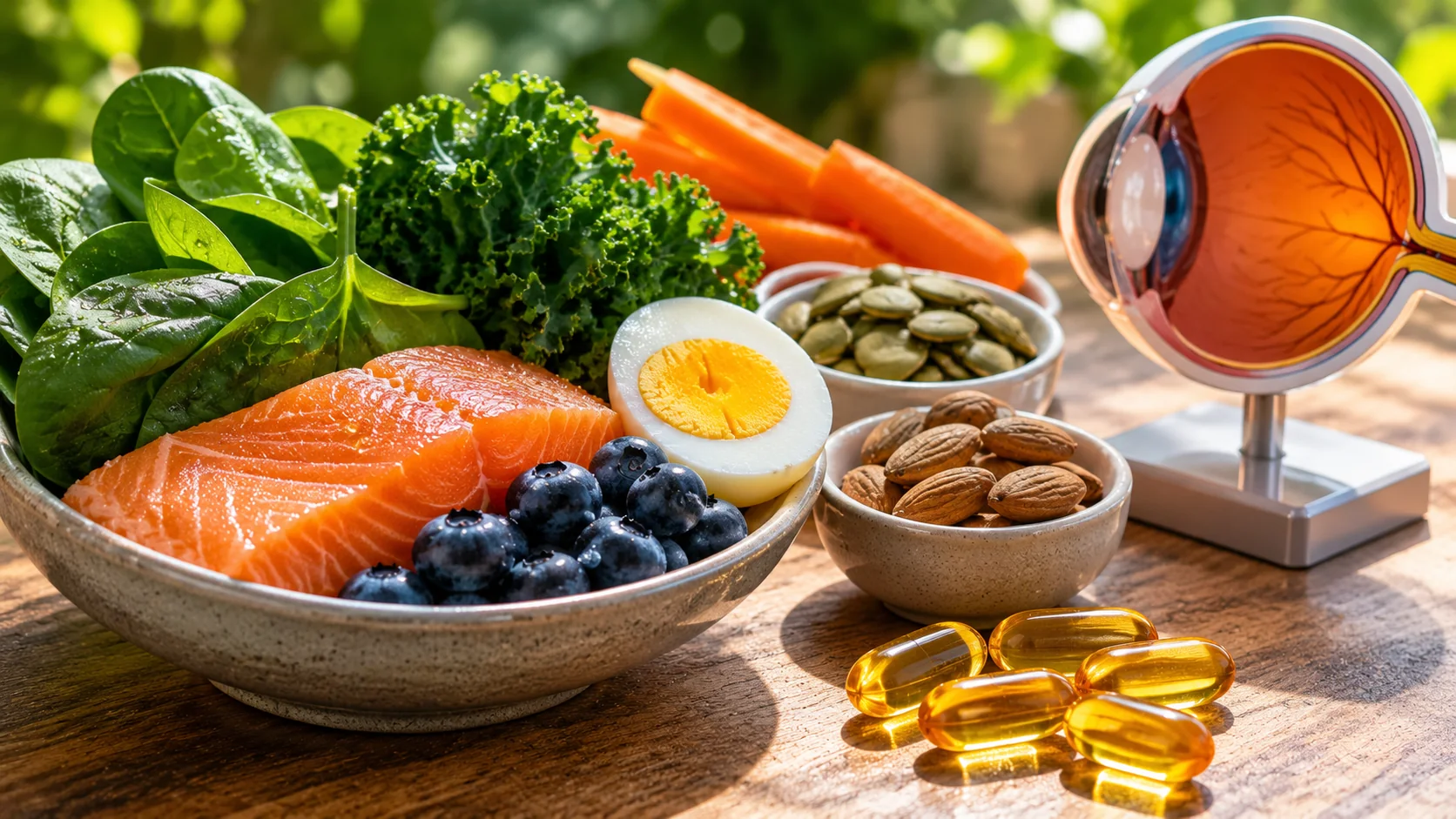
A food-first approach can help people obtain essential nutrients while also providing fiber and other beneficial compounds. Vitamin A can come from eggs, dairy and orange or dark-green vegetables. Vitamin C is abundant in peppers, citrus, berries, kiwi, tomatoes and broccoli. Vitamin E is found in nuts, seeds and vegetable oils. Zinc comes from seafood, meat, dairy, beans and nuts. Copper is present in shellfish, nuts, seeds and whole grains.
No single food guarantees healthy vision, and eating a particular vegetable does not replace eye examinations or treatment. A practical pattern is to include a variety of colorful vegetables and fruit, sources of protein, nuts or seeds, and appropriate whole grains. People with food restrictions, malabsorption conditions or diagnosed nutrient deficiencies may need individualized nutrition advice.
Who should speak with a clinician before supplementing?
People taking prescription medicines, especially anticoagulants or antiplatelet drugs, should have the full supplement label reviewed by a pharmacist or clinician. High-dose vitamin E can affect bleeding risk, and zinc can interfere with some antibiotics and penicillamine. Multiple products may contain overlapping zinc, vitamin A or vitamin E, so total intake matters.
Pregnant people or those planning pregnancy should be particularly careful with preformed vitamin A supplements. People with liver disease, kidney disease, Wilson disease, a history of kidney stones, iron overload, malabsorption or a medically prescribed diet may also need individualized guidance. Children have different nutrient requirements and upper limits from adults; adult supplement serving sizes should not be assumed safe for children.
Do not use supplements to delay assessment of new or worsening visual symptoms. Sudden vision loss, a curtain-like shadow, new flashes or many new floaters, severe eye pain or rapid changes in vision require prompt medical attention. Nutritional supplements do not replace prescribed treatment, retinal monitoring or routine eye examinations.
What the provisional iGenics label tells us—and does not tell us
The working label transcription for this project lists vitamin A 900 mcg, vitamin C 500 mg, vitamin E 0.268 mg, zinc 20 mg and copper 2 mg per two-capsule serving. These values are not final verified product facts. The vitamin E amount is flagged for confirmation because the unit and amount appear inconsistent across available product descriptions. The zinc source wording also requires inspection of the actual label.
The presence of vitamin A, C, E, zinc and copper establishes only that those nutrients are listed in the provisional transcription. It does not establish that the finished product prevents AMD, improves visual acuity, treats cataracts or glaucoma, or produces the results seen in AREDS2. No iGenics-specific controlled clinical trial has been verified in this project. Ingredient research must not be presented as finished-product proof.
Before publication, the editorial team must inspect a current, legible image of the complete Supplement Facts panel and obtain written clarification of the vitamin E amount and zinc/copper forms. The affiliate checkout should also be checked for the current seller, serving instructions, price, shipping and refund terms. Until then, these amounts remain provisional and should not be used as definitive purchase guidance.
Nutrients and their normal roles
| Nutrient | Recognized role | Food examples |
|---|---|---|
| Vitamin A | Supports normal vision and other functions. | Eggs, dairy, liver; orange and dark-green produce provides provitamin A carotenoids. |
| Vitamin C | Supports collagen formation and antioxidant functions. | Citrus, peppers, kiwi, berries and broccoli. |
| Vitamin E | Functions as an antioxidant. | Nuts, seeds and vegetable oils. |
| Zinc | Supports many enzymes and normal physiological processes. | Seafood, meat, beans, nuts and seeds. |
| Copper | Essential trace mineral; relevant to normal iron metabolism. | Shellfish, nuts, seeds and whole grains. |
Normal nutrient functions do not establish that extra supplementation improves eyesight in people with adequate intake.
Frequently asked questions about vitamins and minerals for eye function
Do vitamins A, C and E improve eyesight?
These vitamins have important roles in normal body and eye function, but taking extra amounts does not automatically improve eyesight. Evidence for supplements depends on the nutrient, dose, health status and specific eye condition.
Does zinc help the retina?
Zinc is essential for normal retinal function and vitamin A metabolism. Supplementing above normal needs has not been shown to improve vision in everyone, and excessive long-term intake can cause copper deficiency.
Why is copper included in AREDS2?
Copper is included in the AREDS2 combination partly to reduce the risk of copper deficiency caused by the high zinc dose in that formula.
Is iGenics the same as AREDS2?
No. The provisional label amounts differ from AREDS2, the vitamin E figure is unresolved and product-specific equivalence has not been established.
Can I take iGenics with an AREDS2 supplement?
Do not combine them without professional advice. The products may overlap in nutrients, and total intake could become excessive or interact with medicines.
Is 20 mg of zinc too much?
It is below the adult upper intake level of 40 mg per day, but other food and supplement sources count. Individual needs and medication interactions still matter.
Is vitamin A supplementation safe during pregnancy?
Excess preformed vitamin A can harm fetal development. Pregnant people should avoid adding vitamin A supplements unless advised by their obstetric clinician.
What should I do if the product label and website show different vitamin E amounts?
Treat the amount as unverified. Request a current label image and written clarification from the manufacturer or seller before relying on the claim.
Sources and further reading
- NIH Office of Dietary Supplements — Vitamin A and Carotenoids
- NIH Office of Dietary Supplements — Vitamin C
- NIH Office of Dietary Supplements — Vitamin E
- NIH Office of Dietary Supplements — Zinc
- NIH Office of Dietary Supplements — Copper
- National Eye Institute — AREDS2 Supplements for AMD
- NCCIH — Dietary Supplements for Eye Conditions: What the Science Says
Sources checked November 12, 2026. Product label details are provisional and must be rechecked against the current official label and affiliate checkout before publication. Human editorial review is pending. This page has not been medically reviewed.