Understand the safety questions before considering a supplement.
Ingredient safety depends on dose, formulation, health history and medicines. This guide explains general cautions without claiming a product-specific safety profile.
Check medicines, health conditions and total daily doses.
A multi-ingredient supplement can raise different questions for different people. Review the full ingredient list with a qualified clinician or pharmacist, especially before combining supplements or changing prescribed treatment.
Do not stop or replace prescribed eye treatment based on supplement marketing or this research summary.
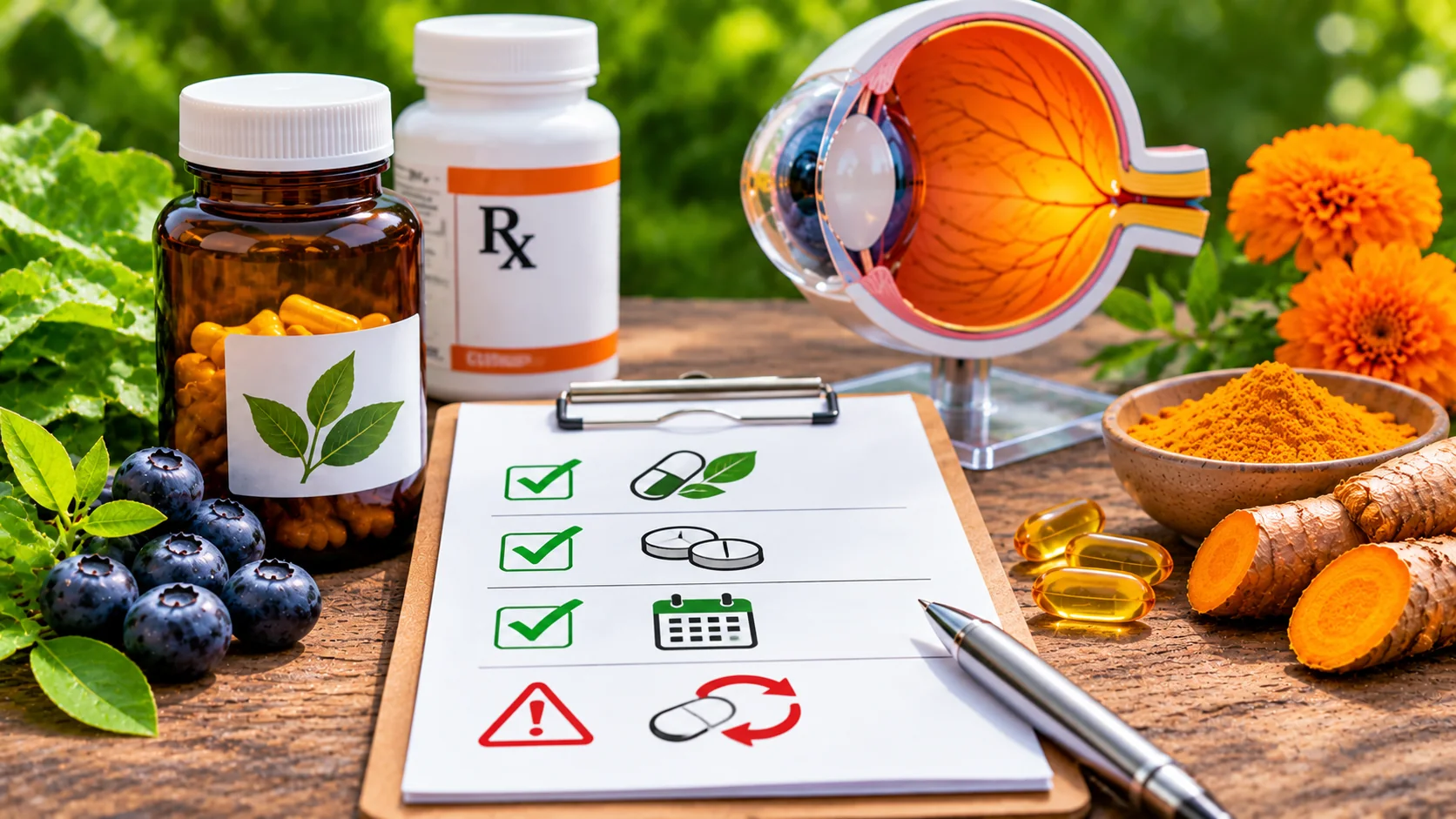
Safety depends on the full picture
Review the current label, medicines, health conditions and total daily doses with a qualified clinician or pharmacist.
General safety information — not an individual medical assessment.Start with the exact formula, not a general claim
Supplement safety depends on the ingredient, amount, chemical form, product quality, other medicines and a person's health history. A nutrient that is essential in food can still cause problems when taken in concentrated supplemental amounts or combined with other products.
The seller-published iGenics label reviewed for this project lists vitamin A, vitamin C, vitamin E, zinc, copper, bilberry, turmeric, ginkgo, black pepper extract, lutein and zeaxanthin. The label image and formulation details should be checked against the current bottle before purchase. Some label wording and vitamin E information have appeared inconsistent across seller-related pages. This page therefore describes ingredient-level considerations, not a confirmed risk assessment of every current iGenics batch.
Do not use this page to diagnose a symptom, decide whether to stop a prescribed medicine or replace advice from a qualified clinician or pharmacist.
| Ingredient or group | General safety consideration | Practical question |
|---|---|---|
| Vitamin A | Excess preformed vitamin A can be harmful; pregnancy makes high intake especially important to review. | Does your multivitamin or other supplement already contain vitamin A? |
| Vitamin C | High supplemental intakes can cause digestive effects in some people. | Are you combining several products containing vitamin C? |
| Vitamin E | High supplemental doses may increase bleeding concerns, particularly with anticoagulant or antiplatelet medicines. | Do you take blood-thinning medication or have a procedure planned? |
| Zinc | Excess intake can cause adverse effects and can interfere with absorption of some antibiotics. | What is your total zinc intake from all products? |
| Copper | Supplemental copper should be considered alongside total intake and individual medical circumstances. | Are you already taking a mineral product containing copper? |
| Ginkgo | May interact with medicines and may increase bleeding concerns. | Do you use anticoagulants, antiplatelets or have surgery planned? |
| Turmeric/curcumin | Some concentrated or enhanced-bioavailability formulations have been associated with liver injury reports. | Do you have liver or gallbladder concerns or take regular medicines? |
| Black pepper/piperine | Piperine can affect the absorption or metabolism of some substances; the exact effect depends on formulation and dose. | Has a pharmacist reviewed the full ingredient combination? |
| Bilberry, lutein, zeaxanthin, saffron | Evidence and safety information vary by extract, amount and population; ingredient data do not prove finished-product safety. | Is the extract standardized and is the amount clearly disclosed? |
Medication interactions deserve particular attention
People who take prescription medicines should review a multi-ingredient supplement with a pharmacist or clinician before starting it. This is especially important when the formula contains botanicals that may affect bleeding, blood pressure, blood sugar, drug metabolism or the way medicines are absorbed. The presence of several ingredients makes it harder to predict the effect of a combination from one ingredient study.
Ginkgo and medicines that affect blood clotting: Ginkgo has been associated with bleeding-related concerns and possible interactions. People taking anticoagulants or antiplatelet medicines should not assume that a botanical supplement is automatically harmless because it is sold without a prescription.
Vitamin E and bleeding risk: High-dose vitamin E supplements may increase bleeding risk, especially when combined with anticoagulant or antiplatelet medicines. The vitamin E amount on the currently reviewed iGenics label has been reported inconsistently across sources, so verify the current package label.
Zinc and antibiotics: Zinc can reduce absorption of certain antibiotics when taken too close together. The timing depends on the specific medicine. A pharmacist can advise whether separation is needed and how long it should be.
Piperine and drug handling: Black pepper extract may influence the absorption or metabolism of some compounds. Do not assume that a small-looking amount has no interaction potential; the exact extract and piperine content matter.
Who should seek professional advice before use?
- People taking medicines: especially anticoagulants, antiplatelet drugs, antibiotics or medicines with narrow dosing requirements.
- People planning surgery or dental procedures: tell the treating professional about every supplement. Do not independently decide when to stop or restart a medicine.
- People who are pregnant, trying to become pregnant or breastfeeding: review all ingredients and amounts with a qualified professional. Preformed vitamin A requires particular care during pregnancy.
- People with liver or gallbladder conditions: concentrated turmeric/curcumin products and other botanicals may not be appropriate for everyone.
- People with kidney, digestive or other chronic conditions: suitability can depend on diagnosis, laboratory results and current treatment.
- People using multiple supplements: add up overlapping nutrients such as vitamin A, C, E, zinc and copper across all products.
- People with previous allergic or adverse reactions: check the full ingredient list and excipients, not just the headline ingredients.
Dose, serving size and cumulative intake
The seller label reviewed for this project describes a serving of two capsules daily. The provisional label transcription lists vitamin A 900 mcg, vitamin C 500 mg, vitamin E 0.268 mg, zinc 20 mg, copper 2 mg, bilberry extract 480 mg, turmeric extract 350 mg, ginkgo biloba powder 80 mg, black pepper extract 20 mg, lutein 20 mg, saffron 20 mg and zeaxanthin 10 mg. These amounts are a transcription of a seller-published label and must be verified against the current product packaging.
Do not interpret the amount of an extract as the amount of its active constituent. For example, 350 mg of turmeric extract does not establish 350 mg of curcumin. Likewise, 20 mg of black pepper extract does not establish 20 mg of piperine. Standardization details and extract ratios matter.
Check the serving size before comparing labels. A product may list amounts per capsule, per serving or per daily dose. Compare like with like and include nutrients from multivitamins, fortified foods and other supplements. More is not automatically better; some nutrients have established upper intake limits or specific safety concerns.
Possible side effects and when to get help
Ingredient-level side effects can include digestive discomfort, nausea or other gastrointestinal symptoms. Allergic reactions are possible with botanical ingredients or other components. The likelihood and severity depend on the person and the exact formulation; a list of possible effects is not a prediction that they will occur.
Stop taking the product and seek medical advice if you experience a concerning new symptom after starting it. Seek urgent medical attention for signs of a severe allergic reaction, such as trouble breathing, swelling of the face or throat, or fainting. Sudden vision loss, a curtain-like shadow, severe eye pain or rapidly worsening vision also needs prompt medical evaluation rather than supplement experimentation.
Report suspected adverse effects to the relevant health professional and retain the bottle, lot number and purchase details. Do not restart a product after a serious reaction unless a qualified professional advises you to do so.
What this page can and cannot establish
Ingredient research can help identify known cautions, but it does not prove that a finished multi-ingredient formula is safe or effective for every person. The dose, extract specification, manufacturing quality, contaminants, interactions and actual use pattern all matter. A seller label is not the same as an independent laboratory test, and an ingredient study is not a clinical trial of iGenics itself.
This website has not independently tested the product, verified a current batch certificate or established a product-specific adverse-event rate. It also does not claim that iGenics prevents, treats or cures an eye disease. People with diagnosed eye conditions should follow their eye-care professional's treatment and monitoring plan.
Safety questions
Can I take iGenics with my prescription medicines?
Do not assume it is compatible. Ask a pharmacist or clinician to review the complete current label and your medication list.
Can ginkgo interact with blood thinners?
Ginkgo has potential bleeding-related interactions. People taking anticoagulants or antiplatelet medicines should seek professional advice before use.
Can zinc affect antibiotics?
Zinc can reduce absorption of certain antibiotics if taken too close together. Ask a pharmacist about the specific medicine and timing.
Is turmeric extract always safe for the liver?
No. Some concentrated or enhanced-bioavailability turmeric/curcumin formulations have been linked to rare liver injury reports.
Is the amount of an extract the same as its active ingredient?
No. Extract weight does not reveal the amount of curcumin, piperine or another active constituent unless standardization is stated.
Can I combine iGenics with another eye supplement?
Check for duplicate nutrients and botanicals. A clinician or pharmacist can help assess total intake and interactions.
Should I stop supplements before surgery?
Tell the surgical team about all supplements and follow their specific instructions. Do not make medication changes independently.
Can supplements replace an eye examination?
No. Supplements do not diagnose the cause of symptoms and should not delay assessment of new or worsening vision problems.
Review the complete ingredient breakdown
See the seller-listed formula, the label limitations and the difference between ingredient amounts and evidence.
Read the medication interaction guide
Review practical questions to take to a pharmacist or clinician.