iGenics Review: Understand the Formula, Evidence and Limitations Before You Decide
iGenics is a multi-ingredient dietary supplement marketed for eye health. This research-based review examines the seller-published label, compares selected nutrients with the AREDS2 research formula, reviews ingredient-level evidence and highlights practical safety and purchase questions. It does not claim that iGenics has been clinically tested or proven to improve vision.
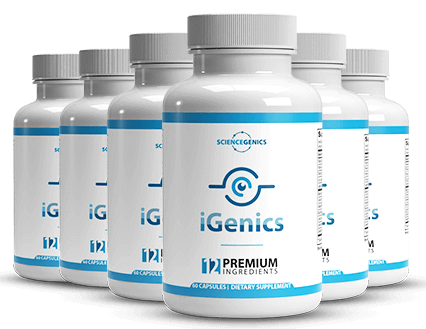
Product photograph supplied for this review. Confirm that the packaging matches the version shown at the seller checkout.
What this iGenics review can—and cannot—confirm
This summary separates details visible in seller material from questions that still require independent verification.
Comparison table · Swipe horizontally on a small screen to read every column.
| Review question | What the available material shows | What remains unconfirmed |
|---|---|---|
| Formula | A seller-provided label lists 12 active ingredients. | Current batch accuracy, ingredient identity, purity and independent testing. |
| Clinical evidence | Some individual ingredients have been studied for specific outcomes. | That the finished iGenics formula produces those outcomes in people. |
| AREDS2 comparison | There is partial ingredient overlap with the NEI AREDS2 formula. | Equivalence to AREDS2; the listed amounts differ. |
| Safety | The formula includes nutrients and botanicals with potential precautions. | Whether it is appropriate for an individual's conditions or medicines. |
| Price and returns | Seller pages publish package and return information. | The final affiliate-checkout price, shipping, eligibility and exact terms. |
Check the current product and checkout details
Review the seller's current package, ingredient label, total price, shipping and return terms before placing an order. The checkout is the final source for the offer presented to you.
Affiliate disclosure: This page may earn a commission if you purchase through this link, at no additional cost to you. This does not change our review conclusions.
Is iGenics worth considering?
iGenics contains several nutrients and botanical ingredients that have been studied separately, including lutein, zeaxanthin, zinc, vitamin C, vitamin A, bilberry, ginkgo, turmeric and saffron. That ingredient list may look comprehensive, but a long formula does not establish that the finished product improves eyesight, prevents age-related macular degeneration (AMD), reverses vision loss or replaces an eye examination. The decisive question is whether the exact iGenics formula, at its actual daily serving, has been tested in appropriate human clinical trials for a clearly defined outcome. In the material reviewed for this draft, we did not identify an iGenics-specific controlled clinical trial establishing those outcomes.
The product page describes iGenics as being based on AREDS2. That is a seller description, not proof that iGenics is the AREDS2 formula or has the same evidence. The National Eye Institute's AREDS2 formulation contains vitamin C 500 mg, vitamin E 400 IU, zinc 80 mg, copper 2 mg, lutein 10 mg and zeaxanthin 2 mg. The seller label captured for iGenics appears to list a different combination and several additional botanicals. The zinc amount shown is 20 mg, not 80 mg; the vitamin E unit and amount require confirmation from a legible current Supplement Facts panel. Therefore, readers should not treat iGenics as interchangeable with an AREDS2 product prescribed or recommended for a person with a particular stage of AMD.
Practical verdict: treat iGenics as a multi-ingredient supplement whose product-specific benefits remain unestablished in the evidence reviewed here. Before buying, verify the current label, total nutrient intake, seller checkout terms, return conditions and suitability with an eye-care professional or pharmacist. People with diagnosed AMD should ask their ophthalmologist whether an AREDS2 formulation is appropriate rather than substituting a product because its marketing uses similar terminology.
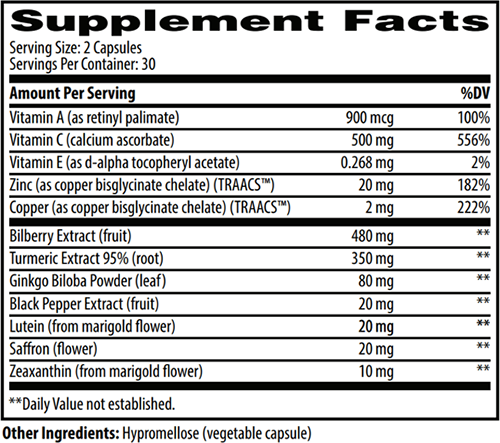
Supplement Facts shown in the supplied image
Use the current physical package as the final reference. The transcribed amounts elsewhere on this site remain subject to label verification, particularly the Vitamin E entry and mineral compound wording.
Seller-provided image. Use is subject to the applicable affiliate-program image-use terms.
iGenics: what is known and what remains uncertain
Comparison table · Swipe horizontally on a small screen to read every column.
| Question | What the available material indicates | Confidence / caveat |
|---|---|---|
| Product type | Multi-ingredient dietary supplement marketed for eye health. | Seller product page; not an independent efficacy finding. |
| Manufacturer / seller identity | Seller material associates the product with Science Genics. | Confirm legal seller and fulfilment entity on the checkout page. |
| Serving information | Seller label image has been presented as two capsules per serving and 30 servings per container. | Recheck the exact bottle and checkout label before publication. |
| Ingredient count | Seller describes 12 nutrients/ingredients. | Count and names must match the current Supplement Facts panel. |
| AREDS2 equivalence | Not established. The listed quantities differ from the NEI AREDS2 formula. | Do not call it an AREDS2 formula or substitute. |
| Finished-product clinical evidence | No iGenics-specific controlled clinical trial was verified in the material reviewed for this draft. | Searches are not proof that no study exists; this statement is limited to the sources checked. |
| Affiliate landing-page prices | Vision Breakthrough displayed $59 for one bottle, $147 for three and $234 for six on November 17, 2026. | Landing-page snapshot only; confirm final checkout price, shipping and taxes. |
| Returns | The affiliate checkout refund period has not been confirmed. Project information supplied for this site refers to 180 days; the separate Science Genics direct store publishes 365 days. | Do not assume the direct-store policy applies to a ClickBank order; check the exact checkout terms. |
What is iGenics?
iGenics is promoted as an eye-health supplement containing a blend of vitamins, minerals, carotenoids and plant extracts. The seller's product page uses language about supporting vision and includes claims about antioxidants, inflammation, ocular function and age-related vision changes. Those statements describe the seller's marketing position. They should not be read as independent proof that the finished product prevents, treats or reverses an eye disease. Under the Federal Trade Commission's health-products guidance, express and implied health claims in advertising need adequate substantiation, and the overall impression created by words and visuals matters.
This distinction is important because supplement marketing can combine a familiar nutrient, a study citation and a product promise in one presentation. A study may have examined a purified ingredient, a different daily dose, a different formulation, or people with a specific diagnosis. The commercial product may not match those conditions. The presence of an ingredient in a clinical trial does not automatically transfer the trial's result to every supplement containing that ingredient.
The review therefore separates six evidence categories: verified product facts taken from a current label or seller document; seller claims; independent research on an ingredient; research on the exact finished product; consumer reports; and information that remains unverified. A reader should be able to tell which category supports each statement. Where a fact is not independently confirmed, it is labelled as seller-reported or pending rather than presented as settled.
The current working label transcription indicates a two-capsule serving and 30 servings per container. This implies a 60-capsule bottle if the label transcription is correct. The label image also appears to list vitamin A, vitamin C, vitamin E, zinc, copper, bilberry, turmeric, ginkgo, black pepper extract, lutein, saffron and zeaxanthin. Because the available image is not a substitute for a readable current bottle label, the quantities below are provisional. The supplied seller-published Supplement Facts graphic clearly reads Vitamin E (as d-alpha tocopheryl acetate) 0.268 mg and 2% Daily Value per two-capsule serving. This is a transcription of that graphic, not authentication of the current physical bottle or the exact variant delivered through the affiliate checkout. Do not silently change the amount or convert it to another unit.
iGenics ingredients and label amounts
The table below records the working transcription from the seller label graphic reviewed for this project. It is not a laboratory analysis and does not independently confirm ingredient identity, purity, potency, bioavailability or manufacturing quality. Do not use it to calculate personal intake until the current Supplement Facts panel is checked against the bottle being sold through the actual checkout route.
Comparison table · Swipe horizontally on a small screen to read every column.
| Label-listed ingredient | Working label amount per serving | What needs checking |
|---|---|---|
| Vitamin A (retinyl palmitate) | 900 mcg | Confirm mcg RAE and the exact label declaration. |
| Vitamin C (calcium ascorbate) | 500 mg | Confirm the amount is per two-capsule serving. |
| Vitamin E (d-alpha tocopheryl acetate) | 0.268 mg (2% DV) | Seller graphic transcription; current physical package not authenticated. |
| Zinc | 20 mg | Seller graphic reads zinc bisglycinate chelate (TRAACS); current package not authenticated. |
| Copper | 2 mg | Seller graphic reads copper bisglycinate chelate (TRAACS); current package not authenticated. |
| Bilberry extract | 480 mg | Standardization, extract ratio and anthocyanin content not verified. |
| Turmeric extract | 350 mg | Curcuminoid standardization and extract composition not verified. |
| Ginkgo biloba powder | 80 mg | Confirm whether powder or standardized extract and its ginkgolide/flavone profile. |
| Black pepper extract | 20 mg | Confirm piperine standardization and interaction information. |
| Lutein | 20 mg | Confirm source, form and amount per serving. |
| Saffron | 20 mg | Confirm botanical identity, extract ratio and standardization. |
| Zeaxanthin | 10 mg | Confirm source, form and amount per serving. |
There is also a label-wording issue in the available image around the zinc and copper source descriptions. The phrase appears unusual and should be checked against the original manufacturer artwork. A transcription error can materially change a safety assessment or nutrient comparison. For that reason, this review does not silently correct the wording or infer a different mineral form.
For a buyer, the most useful label questions are straightforward: Is the quantity stated per capsule or per full serving? Does the serving require one or two capsules? Are the botanical extracts standardized? Are the amounts of active compounds disclosed? Are other ingredients and allergens listed? Is there a lot number and expiration date? Is the label the same on the bottle shipped after checkout? If a seller cannot provide a clear current label, the buyer has less information with which to assess dose, duplication and interactions.
iGenics and AREDS2: similar ingredients do not mean the same formula
AREDS2 is a specific nutrient formulation studied in the Age-Related Eye Disease Study 2. The National Eye Institute reports that the AREDS/AREDS2 supplement formulation reduced the risk of progression from intermediate to advanced AMD by about 25 percent in the studied population. It did not prevent AMD from starting, and it did not show an effect on cataracts. This evidence applies to the studied formulation and population, not to every supplement marketed for vision.
Comparison table · Swipe horizontally on a small screen to read every column.
| Nutrient | NEI AREDS2 amount | Working iGenics label transcription | Comparison |
|---|---|---|---|
| Vitamin C | 500 mg | 500 mg | Same stated amount, subject to label confirmation. |
| Vitamin E | 400 IU | 0.268 mg — unresolved | Cannot compare until iGenics unit and amount are verified. |
| Zinc | 80 mg | 20 mg | Different stated amount. |
| Copper | 2 mg | 2 mg | Same stated amount, subject to label confirmation. |
| Lutein | 10 mg | 20 mg | Different stated amount. |
| Zeaxanthin | 2 mg | 10 mg | Different stated amount. |
| Beta-carotene | Not included in AREDS2 | Not shown in the working transcription | Verify complete label; do not infer from an incomplete image. |
The comparison does not mean that higher or lower amounts are automatically better or worse. It shows that the formulations are not identical. AREDS2 is not simply a list of fashionable eye nutrients; it is a specific combination and dose studied in people with defined stages of AMD. A supplement with extra botanicals or larger carotenoid quantities cannot claim the same result without relevant product-specific evidence.
The NEI advises people to discuss which supplement, if any, is appropriate with an eye-care professional. This is especially important for someone diagnosed with intermediate AMD or advanced AMD in one eye, because the evidence-based decision depends on diagnosis and disease stage. Someone without AMD should not assume that taking an AREDS2-style supplement will prevent the disease from developing.
What research says about the main ingredients
Lutein and zeaxanthin
Lutein and zeaxanthin are carotenoids found in the retina, including the macula. They are often discussed together because they are present in eye tissue and were included in the AREDS2 research formula. The NEI's evidence is specific: the AREDS2 combination was studied as part of a defined formulation in people at risk of progression from intermediate to advanced AMD. It does not establish that taking any amount of lutein and zeaxanthin prevents eye disease in the general population. It also does not prove that iGenics, with its own combination and doses, produces the same outcome.
For consumers, the distinction between a nutrient's biological role and a supplement's clinical benefit matters. A nutrient can be present in the retina and still not produce a measurable benefit when taken by someone who already gets enough from food, has no relevant deficiency, or does not match the population studied. The amount, formulation, baseline nutritional status and health condition all matter. People who have been advised to use an AREDS2 product should compare the exact formulation with the NEI amounts and consult their ophthalmologist before substituting.
Bilberry
Bilberry is a berry that contains anthocyanins, plant pigments with antioxidant activity in laboratory settings. It is commonly marketed for night vision, circulation and eye comfort. However, laboratory antioxidant activity is not the same as proof that an oral bilberry supplement improves night vision or prevents an eye disease. Evidence from small or heterogeneous studies may not establish a reliable clinical effect. The extract's composition also matters: a label amount in milligrams does not reveal the anthocyanin content unless standardization is stated.
The working iGenics transcription lists 480 mg of bilberry extract, but the available material does not establish its extract ratio, anthocyanin percentage or equivalence to an ingredient used in a particular trial. Therefore, a precise clinical-dose comparison cannot be made from the milligram figure alone. Readers should be cautious about marketing language that turns a traditional use or a laboratory mechanism into a promise of sharper night vision.
Ginkgo biloba
Ginkgo has been studied for several health questions, but that does not mean it has been shown to improve vision when included in a multi-ingredient supplement. Extracts can differ in composition and standardization. The working iGenics label transcription describes 80 mg of ginkgo biloba powder; it does not establish that this is a standardized extract or that it matches the preparations used in human studies. A raw powder amount should not be treated as interchangeable with an extract dose.
Ginkgo also deserves a medication review. NCCIH notes potential safety concerns and interactions, including bleeding risk in some circumstances. People taking anticoagulants or antiplatelet medicines, people preparing for surgery, and people with seizure disorders should not assume that a botanical is harmless because it is sold without a prescription. A pharmacist or clinician can review the specific product and medication list.
Turmeric and curcumin
Turmeric contains curcuminoids, including curcumin. Research has examined turmeric and curcumin for a range of inflammatory and other health questions, but findings vary by condition, formulation and study quality. The word “turmeric” on a label does not tell a buyer how much curcumin is present. A 350 mg extract with no stated standardization cannot be equated to a study using a concentrated curcumin preparation.
Black pepper extract is often included because piperine can affect the absorption and metabolism of some compounds. That mechanism is not automatically a benefit: changing absorption can also change medication exposure or interaction risk. People taking prescription medicines should ask a pharmacist before using a formula that combines botanicals with piperine. The product's marketing description of turmeric as a “flow agent” or filler alternative is a seller claim, not independent proof of clinical eye benefit.
Saffron
Saffron contains compounds such as crocin and crocetin and has been studied in small human trials for certain visual outcomes. A promising small study can justify further research, but it is not equivalent to a large, replicated clinical evidence base. Study participants, diagnosis, saffron preparation, dose, duration and outcome measures all affect whether the result applies elsewhere. The working iGenics transcription lists 20 mg of saffron, but it does not provide enough information to match that amount to a particular standardized preparation used in research.
It would therefore be inaccurate to say that iGenics is proven to improve retinal function or reverse vision decline because saffron has appeared in a clinical study. Ingredient research can be described accurately, including its limits, but it should not be used as a shortcut to a product-level claim.
Vitamins A, C and E; zinc and copper
These nutrients have recognized roles in normal physiology. Vitamin A is important for normal vision, and vitamin C, vitamin E and zinc participate in biological processes that include antioxidant functions. Those facts do not establish that extra supplementation improves vision in a person whose intake is already adequate. The right question is not simply whether a nutrient is associated with eye function; it is whether the person needs additional intake and whether the particular supplement has been shown to provide a meaningful benefit.
Excess intake can matter. The NIH Office of Dietary Supplements lists an adult tolerable upper intake level of 40 mg per day for zinc from all sources. The working iGenics label amount of 20 mg would need to be considered alongside food, multivitamins and other supplements. Zinc can also interfere with absorption of certain antibiotics and penicillamine. Preformed vitamin A from retinyl palmitate has an adult upper limit of 3,000 mcg RAE per day; people who are pregnant or could become pregnant should be particularly careful about excess preformed vitamin A. Vitamin E can affect bleeding risk at high supplemental intakes and may interact with anticoagulant or antiplatelet medicines. The product's unclear vitamin E transcription makes that ingredient a priority for label verification.
Potential side effects, interactions and who should be cautious
A supplement containing several vitamins, minerals and botanicals should be reviewed as a combination, not as a collection of individually familiar ingredients. The more ingredients a formula contains, the more opportunities there may be for duplication with other supplements, sensitivity, medication interactions or uncertainty about which ingredient caused an adverse reaction. “Natural” does not mean risk-free, and a product being sold online does not mean it is suitable for every adult.
People who take prescription medicines should ask a pharmacist or clinician to review the complete label before starting iGenics. Particular attention is warranted for anticoagulants and antiplatelet drugs because ginkgo and vitamin E may be relevant to bleeding risk; antibiotics and penicillamine because zinc can interfere with absorption; and medicines with narrow therapeutic ranges or metabolism affected by piperine-containing products. This is not a complete interaction list. The exact risk depends on the medicine, dose, health history and product formulation.
People who are pregnant, trying to become pregnant or breastfeeding should not start a multi-ingredient supplement without professional advice. Retinyl palmitate is a preformed form of vitamin A, and excessive preformed vitamin A intake can cause harm during pregnancy. People with seizure disorders, bleeding disorders, planned surgery, liver or kidney disease, or a history of allergic reactions to botanical ingredients should seek individualized advice. Children should not use an adult supplement unless a qualified clinician specifically recommends it.
Stop taking a supplement and seek medical advice if a concerning reaction occurs. Severe allergic symptoms, difficulty breathing, fainting, chest pain or sudden neurological symptoms require urgent medical attention. A supplement should never delay evaluation of sudden vision loss, new flashes or floaters, a curtain-like shadow, eye pain, double vision or rapidly worsening sight. Those symptoms can signal an urgent eye problem and need prompt professional assessment.
For a more detailed discussion, see the iGenics safety and side-effects guide. That page should be read alongside the actual bottle label and the medication information supplied by a person's clinician or pharmacist.
Five checks to make before buying an eye supplement
- Start with the diagnosis, not the advertisement. If an eye-care professional has diagnosed AMD or another condition, ask what evidence-based treatment or nutritional approach applies to that diagnosis and stage. Do not self-diagnose from symptoms or marketing quizzes.
- Compare the exact Supplement Facts panel. Check serving size, amounts, ingredient forms, standardization, other ingredients and warnings. Do not compare two products by the front label or by the number of ingredients alone.
- Look for evidence on the finished product. Ask whether the exact branded formula has been studied in controlled human trials. If the seller cites ingredient studies, compare the dose, preparation, population and outcome with the marketed product.
- Review the whole medication and supplement list. Include multivitamins, eye vitamins, herbal products, fortified drinks and medicines. A pharmacist can identify duplication and interactions that are easy to miss.
- Verify the seller and the terms before paying. Confirm the checkout domain, final price, shipping destination, recurring billing status, return eligibility, refund method and customer-service contact. Save the order confirmation and a copy of the terms shown at purchase.
This checklist is intentionally practical. It does not diagnose a condition or determine whether a particular supplement is appropriate. It helps a buyer identify missing information before making a financial or health decision.
How much does iGenics cost?
The Vision Breakthrough affiliate landing page displayed $59 for one bottle, $147 for three bottles ($49 per bottle), and $234 for six bottles ($39 per bottle) when checked on November 17, 2026. It displayed $9.99 shipping for the one-bottle option and free shipping for the three- and six-bottle options. These are dated landing-page observations, not guaranteed checkout totals. Confirm the product, package, shipping, taxes and final amount immediately before payment. A separate Science Genics direct-store page may show different prices and terms; those should not be treated as the affiliate offer.
Before relying on any displayed price, check the amount shown immediately before payment. A package price may exclude shipping, taxes or other charges. A multi-bottle bundle may reduce the apparent per-bottle price but increases the upfront amount and the quantity purchased. If a buyer has not used the product before, a large bundle may create unnecessary financial exposure even when a seller advertises a discount. Compare the total checkout amount, cost per bottle, number of servings and actual daily serving rather than relying on a percentage-savings banner.
To calculate cost per day, divide the total product price by the number of daily servings included in the purchased package. If the seller confirms 30 servings per bottle and the daily serving is two capsules, one bottle would represent 30 days at the labelled use. For example, a $59 bottle would be about $1.97 per labelled day before shipping and tax, using the seller-displayed 30 servings per bottle. This is arithmetic based on the seller's displayed price and the provisional 30-serving label detail; it is not a recommendation to buy or use the supplement. If the current bottle or serving instructions differ, the calculation changes.
See the iGenics pricing and value page for the dated package observations and the questions to verify at checkout. Prices and offers should be rechecked immediately before publication and periodically after launch.
Shipping, returns and cancellation: read the exact checkout terms
The refund period for the ClickBank affiliate offer has not been independently confirmed from the checkout terms. Project information supplied for this website has referred to a 180-day offer, but the publicly accessible affiliate landing page does not establish the detailed return conditions. Separately, the Science Genics direct storefront currently advertises a 365-day guarantee: its Return & Exchange page measures 365 days from receipt, while its Terms describe 365 days from purchase and deduct shipping and handling. Those direct-store terms may not govern an order placed through the affiliate route. Check and save the exact policy shown for the order before paying.
Shipping information also varies by seller page. The Vision Breakthrough affiliate landing page displayed $9.99 shipping for the one-bottle option and free shipping for the three- and six-bottle options when checked on November 17, 2026. The separate Science Genics direct-store shipping policy describes shipping charges calculated at checkout and free shipping for six bottles. These are different storefront descriptions; confirm the final shipping charge and delivery terms on the checkout used for your order.
Before ordering, save the return policy, shipping policy, terms and final checkout screen. Confirm whether the guarantee starts on the order date or delivery date; whether the buyer must contact support before sending anything back; whether opened bottles are accepted; whether only one opened bottle is eligible; whether shipping and handling are deducted; who pays return shipping; and whether the policy applies to the exact package purchased. Ask support to confirm any unclear point in writing.
For cancellation, check whether the order is a one-time purchase or an auto-ship/subscription arrangement. Do not assume a multi-bottle bundle is a subscription, and do not assume it is not one: read the actual checkout wording. If recurring billing is disclosed, identify the renewal amount, frequency, cancellation deadline and method. The working project has not verified recurring billing on the affiliate checkout, so this review does not assert that iGenics is or is not a subscription.
Read the refund and cancellation guide and seller verification page. This website is an information publisher, not the seller. It cannot authorize returns, issue refunds, change orders or guarantee that the seller will approve a request.
Who should avoid starting iGenics without professional advice?
Anyone with a diagnosed eye condition should first ask the treating eye-care professional whether a supplement is appropriate and whether it could interfere with the existing care plan. This is especially important for people with AMD who have been advised to use a specific AREDS2 formulation. Do not replace a clinician-recommended product with iGenics based only on the seller's “based on AREDS2” wording.
People taking blood thinners, antiplatelet medicines, certain antibiotics or penicillamine should request a pharmacist review. People with planned surgery, bleeding disorders, seizure disorders or significant chronic illness should also seek advice. Anyone who already takes a multivitamin, a separate zinc supplement, vitamin A, vitamin E, bilberry, ginkgo, turmeric, saffron or another eye formula should compare total daily intake before adding another product.
Pregnant people and those who may become pregnant should be cautious with supplements containing preformed vitamin A. People with a known allergy to any listed ingredient should avoid exposure unless their clinician has specifically assessed the risk. Children should not take the adult product unless advised by a qualified health professional. If the product label is incomplete, illegible or inconsistent, that alone is a reason to delay purchase until the seller supplies a clear current label.
Evidence limitations and editorial method
This is a research-based review, not a personal-use review. Nina Banette is the publisher of this independent iGenics review website and serves as its Independent Product Reviewer. The author is not presented as a physician, optometrist, pharmacist, researcher or other licensed health professional. No product purchase, unboxing, independent laboratory test, certificate-of-analysis verification or customer-service test is claimed in this draft. No clinical trial has been conducted by this publisher.
This is an independent review and information website, not the manufacturer or official seller of iGenics. For the latest ingredient list, package options, prices, availability, shipping, guarantee and purchase terms, consult the official iGenics website before ordering.
The review gives priority to government health agencies, recognized clinical research and primary sources. The NEI is used for AREDS/AREDS2 findings and formula amounts. The NIH Office of Dietary Supplements is used for nutrient safety and upper-intake information. NCCIH is used for botanical safety and evidence context. The FTC's Health Products Compliance Guidance informs the standard for careful health-related claims. Seller pages are used only to describe what the seller currently says about the product, price and policies; they are not treated as independent scientific evidence.
Important limitations remain. The current label transcription needs a high-resolution image and verification against the exact product shipped through the affiliate checkout. The vitamin E amount and unit are unresolved. Botanical extract standardization is not fully disclosed in the material available for this draft. The affiliate destination has not been reconciled with the separate Science Genics storefront. Current package prices, shipping and return conditions may differ at checkout. The absence of a verified iGenics-specific trial in the reviewed materials does not prove that no such study exists; it means the publisher has not verified one that substantiates the product's advertised eye-health outcomes.
Our editorial approach is to update time-sensitive facts when a source changes, record the date of review and correct errors transparently. A page should not say “medically reviewed,” “clinically proven,” “independently tested” or “personally tested” unless the corresponding activity has actually occurred and can be documented. See the editorial methodology, sources policy and corrections policy.
Compare the review with the current seller offer
Confirm the product version, serving size, package quantity, final checkout total and applicable return terms. Do not rely on older promotional graphics or prices.
Our current iGenics review conclusion
iGenics combines familiar nutrients and botanicals in a single eye-health supplement, but the available seller label and ingredient research do not establish that the finished product prevents AMD, reverses vision decline or improves eyesight. Its seller-described relationship to AREDS2 should not be mistaken for equivalence: the listed amounts differ from the NEI formula, and one key vitamin E entry remains unresolved. The exact product-specific clinical evidence was not verified for this review.
For a person with diagnosed AMD, the most important next step is a conversation with an ophthalmologist about the evidence-based options for that diagnosis and stage. For a person considering a general eye supplement, the sensible approach is to check the full label, total nutrient intake, medication interactions, seller identity and return terms. If any of those details cannot be confirmed, waiting is reasonable. A supplement should not replace routine eye care, a balanced diet, prescribed treatment or urgent assessment of new symptoms.
We will update this conclusion if the manufacturer provides a verified current label, product-specific controlled clinical evidence, independent quality documentation or written clarification of the affiliate checkout terms. Until then, the most accurate description is that iGenics is a multi-ingredient supplement with ingredient-level research of varying strength, but unverified product-level effectiveness.
iGenics review FAQs
1. Does iGenics improve eyesight?
The reviewed material does not establish that iGenics improves eyesight. Some ingredients have been studied for specific outcomes, but that does not prove the finished iGenics formula produces the same effects. A product-specific controlled trial would be needed to support a reliable claim about the exact formula.
2. Is iGenics the same as AREDS2?
No equivalence has been established. The NEI AREDS2 formula specifies vitamin C 500 mg, vitamin E 400 IU, zinc 80 mg, copper 2 mg, lutein 10 mg and zeaxanthin 2 mg. The working iGenics label transcription differs in several amounts, and its vitamin E entry needs verification. Ask an ophthalmologist before substituting it for an AREDS2 product.
3. Does iGenics prevent macular degeneration?
The reviewed evidence does not show that iGenics prevents AMD. NEI findings for AREDS2 concern slowing progression in certain people who already have intermediate AMD or advanced AMD in one eye; the formula does not prevent AMD from starting. Those results cannot be transferred to iGenics without relevant product-specific evidence.
4. What ingredients are listed in iGenics?
The working seller-label transcription lists vitamin A, vitamin C, vitamin E, zinc, copper, bilberry, turmeric, ginkgo, black pepper extract, lutein, saffron and zeaxanthin. The exact quantities and forms should be checked against a clear current Supplement Facts panel before purchase, particularly the vitamin E entry.
5. Is iGenics safe to take with medication?
That cannot be determined without reviewing the exact label and the person's medicines and health history. Zinc can interact with some antibiotics and penicillamine, while ginkgo, vitamin E and piperine-containing products raise additional interaction questions. Ask a pharmacist or clinician to review the complete formula before starting.
6. How much does iGenics cost?
The Vision Breakthrough affiliate landing page displayed $59 for one bottle, $147 for three bottles ($49 per bottle), and $234 for six bottles ($39 per bottle) when checked on November 17, 2026. It displayed $9.99 shipping for the one-bottle option and free shipping for the three- and six-bottle options. These are dated landing-page observations, not guaranteed checkout totals. Confirm the product, package, shipping, taxes and final amount immediately before payment.
7. What refund period applies to the affiliate offer?
The affiliate offer's refund period has not been confirmed from its checkout terms. Project information supplied for this website has referred to 180 days. The separate Science Genics direct store currently advertises 365 days, but its Return & Exchange page and Terms use different start dates. Do not assume the direct-store policy applies to a ClickBank order; check the exact checkout terms.
8. Has iGenics been independently tested?
This publisher has not independently tested iGenics, verified a certificate of analysis or performed laboratory analysis. The review is based on seller materials and independent published research about selected ingredients and eye-health evidence. No independent quality-testing result is claimed.
Primary sources used for this review
- National Eye Institute: AREDS/AREDS2 Clinical Trials — study findings and formula amounts.
- National Eye Institute: AREDS/AREDS2 FAQs — who may benefit and why an eye-care professional should guide supplement choice.
- NIH Office of Dietary Supplements: Zinc Fact Sheet — upper intake level, adverse effects and medication interactions.
- NIH Office of Dietary Supplements: Vitamin A Fact Sheet — preformed vitamin A upper intake levels.
- National Center for Complementary and Integrative Health: Ginkgo — evidence and safety information.
- National Center for Complementary and Integrative Health: Turmeric — evidence and safety information.
- Federal Trade Commission: Health Products Compliance Guidance — substantiation and advertising principles.
- Science Genics: iGenics product page (seller source; affiliate link) — seller claims and dated storefront observations; not independent efficacy evidence.
Review date: November 12, 2026. Product and seller facts are time-sensitive. This draft requires label confirmation, checkout verification and human editorial review before publication.