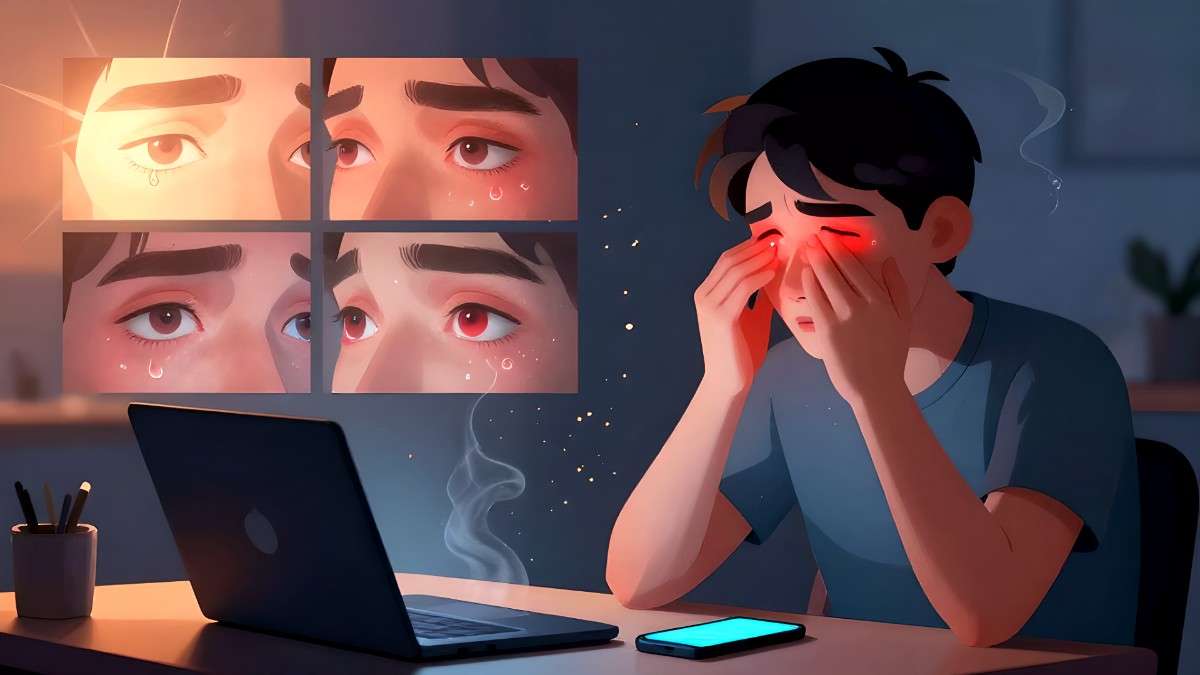
If your eyes burn, sting, or feel raw, you are not imagining it and you are not alone. Burning eyes are one of the most common eye complaints people deal with daily, yet the range of possible causes is wider than most people expect. Whether it is a dry eye condition, an allergic reaction to pollen, eyelid irritation, or something you have been touching without realizing it, that burning or stinging sensation is your body flagging a problem. Most causes are manageable. Some need a doctor. This guide covers both.
What causes burning eyes? Burning eyes are most commonly caused by dry eye syndrome, allergies, digital eye strain, environmental irritants such as smoke or chlorine, or eyelid inflammation (blepharitis). Pink eye (conjunctivitis), contact lens issues, UV exposure, hormonal changes, and ocular rosacea are also frequent culprits. In most cases, the burning sensation in your eyes can be relieved at home. Persistent or severe burning warrants an eye exam.
Burning eyes are not always just a single sensation. People describe the feeling in several ways:
A stinging or smarting feeling, similar to getting soap in your eye
Dryness paired with a gritty sensation, as if something is trapped inside
Redness and sensitivity to light
Watery eyes that paradoxically still feel dry
A raw, tender quality around the eyelids
These variations matter because they can point to different underlying causes. Sometimes one or both eyes are affected. Sometimes the burning is constant; other times it comes and goes. The pattern is a clue. Let's break it down.
Your eyes are reacting for a reason, here’s how to calm and protect them.
Dry eye syndrome is the single most common cause of burning eyes, and it is far more widespread than most people realize. According to the American Academy of Ophthalmology, an estimated 16 million Americans have been diagnosed with dry eye disease and millions more go undiagnosed. Your tears are not just water they are a complex mixture of oils, water, and mucus that coat the surface of your eye. When eyes don't produce enough tears, or when the tears evaporate too quickly, the tear film breaks down faster than it should.
When the eye's surface is inadequately lubricated, nerve endings become exposed and irritated. That irritation registers as burning, stinging, and sometimes paradoxical tearing. This is when your eye overproduces watery tears to compensate, but those tears lack the oil needed to stay on the surface. Chronic dry eye, left unmanaged, can affect your quality of life significantly — not just your comfort.
Who gets it? Dry eye is especially common in people over 50, women going through hormonal changes, contact lens wearers, and anyone who spends long hours staring at a screen. If your eyes tend to feel worse by the end of the day or in air-conditioned rooms, dry eye syndrome is likely at play.
Common triggers include:
Air conditioning and central heating (both reduce humidity and dry out your eyes)
Long-haul flights
Windy or dry environments
Prolonged screen use
Certain medications, including antihistamines, antidepressants, and blood pressure drugs
If your burning eyes arrive predictably after hours of screen time, digital eye strain is almost certainly the cause. On average, people blink about 15–20 times per minute. Studies show that number drops to around 5–7 times per minute when looking at a screen. Blinking is what spreads tears across the eye surface, so less blinking means tears evaporate too quickly and that leads to burning.
Other contributors to digital strain include:
Screens positioned at the wrong height or distance
Poor ambient lighting that forces your eyes to work harder
Uncorrected vision problems that become obvious during close work
Blue light exposure, which may contribute to visual fatigue over long sessions
The 20-20-20 rule is one of the most cited remedies to maintain eye health naturally: every 20 minutes, look at something 20 feet away for at least 20 seconds. Resting the eyes like this even briefly, genuinely reduces strain buildup and helps your eyes maintain a healthier tear film throughout the day.
Allergic conjunctivitis is a major cause of burning, itchy eyes. When your immune system overreacts to an allergen called pollen, pet dander, dust mites and mold, it releases histamine. Histamine causes blood vessels in the eye to dilate and the surface to become inflamed. If you burn when you're around animals, freshly cut grass, or during spring pollen season, allergies are almost certainly involved.
Unlike most other causes of eye burning, allergies almost always come with intense itching. The combination of burning and itching, especially in both eyes at once, is a strong allergy signal.
Seasonal vs. perennial allergies: Some people only suffer during spring or fall when pollen counts peak. Others deal with symptoms year-round due to indoor allergens like dust mites or pet dander. Rubbing your eyes when they itch may feel satisfying in the moment, but it actually worsens inflammation and can introduce bacteria from your hands, making things significantly worse.
The eye surface is remarkably sensitive. A range of possible causes of eye burning comes directly from the environment around you. Airborne irritants can affect your eyes within seconds:
Smoke — cigarette smoke, campfire smoke, and wildfire haze are all common culprits
Chlorine — pool water is a classic cause of after-swim burning and eye irritation
Pollution — particulate matter and chemical compounds in urban air can settle on the eye surface
Chemical fumes — cleaning products, paint, hairspray, and solvents
Wind — dry, fast-moving air strips moisture from the eye surface quickly
UV rays from the sun — even indirect sun exposure over time can irritate unprotected eyes
These causes are usually short-lived. Once you remove yourself from the irritating environment or rinse your eyes with clean water, the burning should ease within minutes to an hour. To protect your eyes from wind and UV irritants outdoors, wrap-around sunglasses are one of the most underrated tools available.
Conjunctivitis, commonly called pink eye is inflammation of the conjunctiva, the thin transparent tissue lining the inside of the eyelid and covering the white of the eye. It is a common eye condition that can cause burning and redness in one or both eyes.
It comes in three main varieties:
Viral conjunctivitis — caused by the same viruses responsible for the common cold; highly contagious; usually resolves on its own within one to two weeks
Bacterial conjunctivitis — produces more discharge (often yellow or green) and may require antibiotic eye drops and medical treatment
Allergic conjunctivitis — triggered by allergens; not contagious
All three types can produce burning alongside redness, discharge, and light sensitivity. An eye exam is the only reliable way to diagnose and treat the correct type. If you suspect pink eye, avoid touching your eyes and wash your hands frequently to prevent spreading it.
Blepharitis is chronic inflammation of the eyelids — specifically the edges where eyelashes grow. It is caused by an overgrowth of bacteria that naturally live on the skin, or by a dysfunction of the small oil glands (meibomian glands) in the eyelid margin. Because those glands are responsible for the oily layer of the tear film, when they malfunction, tears evaporate too quickly and burning follows.
The symptoms are often worse in the morning and include:
Burning and stinging in the eyes
Crusty or greasy eyelids
A feeling that something is in the eye
Red, swollen eyelid edges
Blepharitis is a chronic eye condition that rarely resolves completely, but it can be well managed with a consistent routine of warm compresses and gentle eyelid scrubs. People who deal with eyelid irritation daily and haven't been diagnosed with blepharitis are often surprised to learn it is the culprit.
Contact lenses sit directly on the surface of your eye, and any problem with fit, hygiene, or wear time can lead to burning. Common contact-related causes include:
Extended wear — wearing lenses longer than recommended reduces oxygen to the cornea
Lens deposits — protein and lipid deposits build up on lenses over time and irritate the surface
Poor fit — lenses that are too tight or too loose disrupt the tear film and cause the eyes to burn
Solution sensitivity — some people react to preservatives in contact lens solutions
Sleeping in lenses — even lenses marketed as "extended wear" significantly increase infection risk
If your eyes can also burn immediately after removing contacts, that is often a sign the lens fit or material isn't right for your eye. An optometrist can help you find a better match. Never ignore persistent burning in the eyes — it can signal the start of a more serious problem.
Rosacea is typically thought of as a skin condition causing redness and flushing across nose and cheeks, but it frequently affects the eyes too. Ocular rosacea causes chronic eyelid inflammation and burning that can be mistaken for ordinary dry eye or blepharitis. Research suggests that up to 58% of people with skin rosacea also have ocular involvement, yet it remains widely underdiagnosed.
It is commonly missed because patients and doctors alike focus on the skin symptoms first. If you have rosacea and also deal with persistent burning, redness, and sensitivity in your eyes, ask your doctor specifically about the ocular form. It is a real and treatable medical condition.
Too much ultraviolet light can literally burn your cornea, a condition called photokeratitis. It is essentially a sunburn on the surface of your eye. This is one cause of burning eyes that surprises people because symptoms often don't appear until hours after exposure. It can happen from:
Extended time on snow or water without sunglasses (snow blindness)
Looking at welding arcs without proper protection
Tanning beds without eye covering
Prolonged sun exposure at high altitude
The burning sensation in your eyes from photokeratitis can be intense. It typically resolves within one to two days, but it is painful — and completely preventable with proper eye protection outdoors.
Fluctuating hormone levels, particularly estrogen directly affect tear production. Many women notice that their dry eyes tend to get worse during specific life stages:
During and after menopause
While pregnant
During certain phases of the menstrual cycle
When taking hormonal birth control
This is not imagined. The connection between hormones and tear gland function is well documented in ophthalmology research. If burning eyes seem to track with hormonal events in your life, that pattern is medically significant and worth discussing with both your gynecologist and an eye care professional.
Some causes of burning eyes are less frequent but worth knowing, particularly if symptoms persist despite treating the obvious possibilities:
Sjögren's syndrome — an autoimmune condition that attacks moisture-producing glands, causing severe dry eyes and dry mouth; the eye dryness can be extreme
Thyroid eye disease — associated with Graves' disease; causes eye protrusion and surface exposure, leading to burning and dryness
Corneal abrasion — a scratch on the cornea from a foreign body, fingernail, or contact lens causes sharp burning that needs prompt eye care
Anterior uveitis — inflammation inside the eye that can present with burning, redness, and light sensitivity
Vitamin A deficiency — rare in developed countries but a serious cause of dry eye and eye surface damage globally
For most everyday causes of burning eyes, these measures help significantly. Think of this as your first-line eye care toolkit:
Artificial tears (lubricating eye drops): Over-the-counter lubricating eye drops are safe, effective, and available without a prescription. They work by supplementing the tear film when your eyes don't produce enough on their own. If you need them more than four times a day, choose a preservative-free formulation to avoid further eye irritation. Using old or expired eye drops can sometimes make irritation worse instead of better.
Warm compresses: A warm, damp cloth held over closed eyes for 5–10 minutes helps melt hardened oils in the meibomian glands, improving tear quality. This is particularly useful for blepharitis and meibomian gland dysfunction — two eye conditions that respond well to consistent heat therapy.
Eyelid hygiene: Gently cleaning the eyelid margins with a diluted baby shampoo solution or commercial lid scrub wipes reduces bacterial overgrowth and eyelid inflammation. Make it a daily habit if you deal with chronic irritation.
Humidifier: Adding moisture to indoor air — especially in air-conditioned or centrally heated rooms — reduces tear evaporation and helps keep your eyes comfortable for longer periods.
Screen setup and break habits: Lower screen brightness, increase font size, position your monitor slightly below eye level, and apply the 20-20-20 rule consistently. Resting the eyes regularly is not optional — it is maintenance.
Antihistamine eye drops: If allergies are the cause, antihistamine drops (like ketotifen, available over the counter) can reduce itching and burning within minutes. Taking an oral antihistamine can also help, though some formulations may actually dry out your eyes further — read the label.
Sunglasses: Wrap-around or close-fitting sunglasses with UV protection reduce wind exposure and help protect your eyes from the rays of the sun outdoors. They are particularly important for people who are already dealing with dry or sensitive eyes.
Home remedies work for mild, occasional burning with a clear cause. But some symptoms mean it is time to stop self-treating and see an eye doctor or eye care professional:
Burning is severe or comes on suddenly without an obvious cause
You notice significant vision changes, blurring, or halos around lights
There is heavy discharge, especially yellow or green
The eye is very red and painful and not just mildly irritated
You have had a recent eye injury or suspect a foreign body is in your eye
Symptoms persist beyond a week despite home treatment
You have a history of herpes simplex virus, which can cause serious eye infections
You are a contact lens wearer with increasing discomfort
An optometrist or ophthalmologist can perform a slit-lamp exam, check your tear production with a Schirmer test, and assess the health of your cornea and eyelids to diagnose and treat the exact cause not just the symptom. Do not delay an eye exam when something feels genuinely wrong.
Once you identify what causes your eye burning, prevention becomes much easier:
Stay hydrated — adequate water intake supports tear production and keeps the eye surface healthier
Take regular screen breaks — schedule them; do not rely on willpower
Eat omega-3 fatty acids — found in fatty fish, flaxseed, and walnuts; Research suggests they improve tear film quality and help support clear vision and eye health.
Avoid smoking — cigarette smoke is one of the most direct environmental causes of eye irritation
Replace contacts on schedule — and never sleep in them unless specifically designed for overnight wear
Wear sunglasses consistently outdoors — not just on beach days; wind alone can dry out your eyes significantly
Manage allergies before peak season — starting antihistamine drops or medications before symptoms peak is far more effective than reacting after the fact
Keep your hands away from your face — touching your eyes transfers bacteria and allergens directly onto the eye surface
Most of the time, burning eyes have a clear cause and a straightforward fix. The problem is that people either ignore the symptoms until they become a persistent burning issue, or they treat the wrong cause and wonder why nothing works. Pay attention to when the burning happens, what environment you are in, and whether it affects one or both eyes. Those details narrow it down fast.
If home remedies give you relief within a day or two, you have probably found your answer. If they do not or if the burning is getting worse then book an eye exam. Your eyes are not something to troubleshoot indefinitely on your own.
Burning eyes are usually a sign of surface-level irritation — dry eye, allergies, or eyelid inflammation rather than a deep structural problem. That said, what burning eyes could mean depends heavily on the accompanying symptoms. If the burning comes with vision changes, heavy discharge, or significant pain, it can signal a more serious eye problem that needs prompt attention from an eye care professional. On its own, occasional burning is rarely alarming. Persistent burning is worth investigating.
The most common causes and home remedies go hand in hand. Burning eyes can be caused by dry eye syndrome, allergies, digital eye strain, smoke, chlorine, and eyelid conditions like blepharitis. For each of these, effective home remedies exist like lubricating eye drops for dryness, antihistamine drops for allergies, warm compresses for eyelid inflammation, and the 20-20-20 rule for screen fatigue. Matching the remedy to the correct cause is what makes the difference between fast relief and ongoing frustration.
Yes, this is one of the most common way people accidentally make irritated eyes worse. Touching your eyes or face transfers bacteria, allergens, and environmental irritants directly onto the eye surface. That contact can cause inflammation, introduce infection, and turn mild irritation into something more serious. If your eyes are already experiencing a burning or stinging feeling, keeping your hands away from your face is one of the simplest and most effective things you can do.
Dry eyes tend to occur more frequently in low-humidity environments because the tear film evaporates faster when the air is dry. Air-conditioned offices, heated indoor spaces, airplane cabins, and windy outdoor conditions all pull moisture from the eye surface faster than it can be replaced. This leads to a burning feeling that worsens as the day goes on. Using a humidifier indoors, staying hydrated, and using lubricating drops in these environments can make your eyes feel noticeably more comfortable.
When simple home care doesn't resolve the issue, it usually means either the wrong cause is being treated or the underlying eye condition is more complex than it appears. Persistent burning eyes can be caused by chronic dry eye disease, ocular rosacea, blepharitis, or autoimmune conditions like Sjögren's syndrome — none of which fully respond to over-the-counter drops alone. Stinging or burning that comes back repeatedly, or that seems to lead to burning eyes in multiple different settings, is a clear signal to get a proper eye exam and diagnosis.
Absolutely. Several ordinary habits can lead to a burning sensation building up gradually. Staring at screens without breaks reduces blink rate, which lets tears evaporate too quickly. Not replacing contact lenses on schedule allows deposits to accumulate and irritate the eye surface. Skipping sunglasses outdoors exposes your eyes to UV rays and wind that make your eyes feel raw by the end of the day. Even sleeping in a room with a fan blowing directly toward your face can create enough airflow to dry out your eyes overnight. Small habit changes often produce a bigger improvement than any single eye drop or treatment.
This article is intended for general informational purposes and does not constitute medical advice. If you are experiencing persistent or severe eye symptoms, please consult a qualified eye care professional.