Are Blue Eyes More Sensitive to Light? Here's What Science Actually Says

If you have blue eyes and find yourself squinting the moment you step outside, reaching for sunglasses before anyone else in the group, or struggling under fluorescent office lighting while people with brown eyes seem unbothered, you are not imagining things. There is a clear biological reason why people with light eyes tend to experience this more than others. The question of whether blue eyes are genuinely sensitive to sunlight, or whether this is simply a widespread myth, has been studied by ophthalmologists and optometry researchers for years, and the evidence is compelling. Understanding what is actually happening inside your eye can genuinely help you take better care of your eyes.

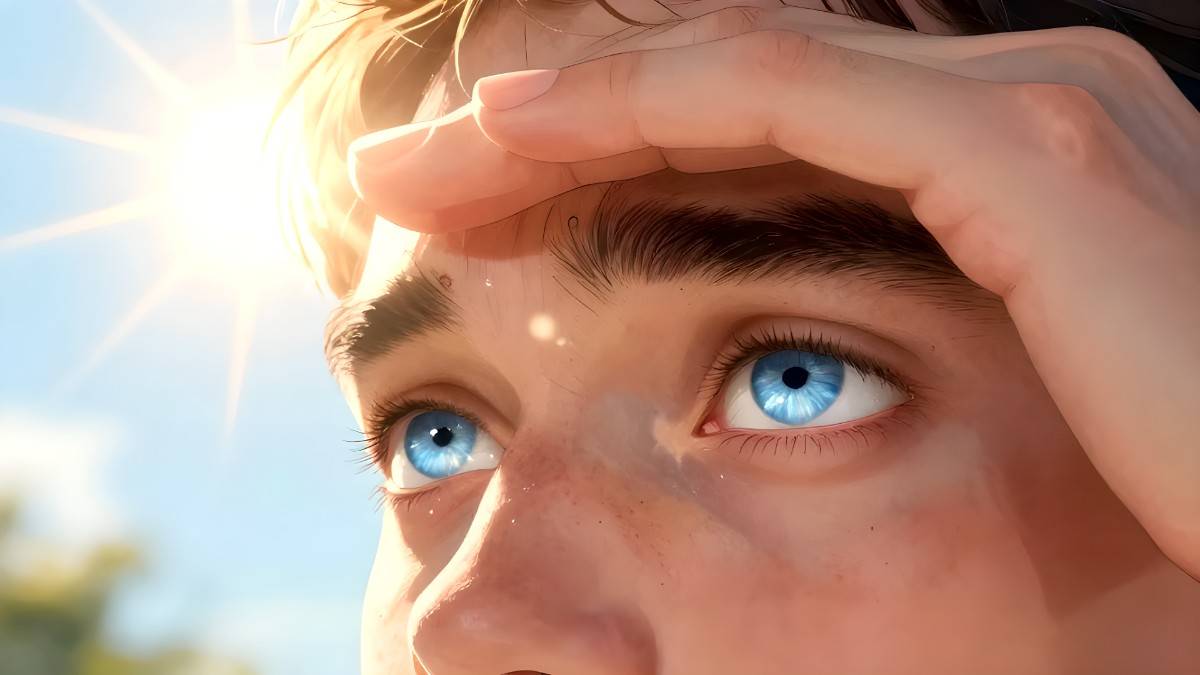
Are Blue Eyes More Sensitive to Light


This article breaks down the science behind light sensitivity in people with lighter-colored eyes, explains what is happening at the level of the iris and retina, explores the long-term eye health implications, and offers practical guidance on how to protect your vision from solar radiation and daily photosensitivity.

Are Blue Eyes Really More Sensitive to Light? The Short Answer

According to Duke Health ophthalmologist Dr. Anupama Horne, people with light-colored eyes including blue, green, and grey are indeed more prone to light sensitivity, a condition medically known as photophobia. The reason comes down to a single molecule: melanin, the pigment that determines eye colour, skin tone, and hair color.

Blue eyes are more sensitive to light than brown eyes. Because they contain a lower amount of melanin in the iris, lighter irises absorb less incoming light and allow more of it to reach the retina. This excess light overstimulates the eye's photoreceptor cells, causing discomfort, squinting, and in some cases pain, a condition known as photophobia. Blue eyes tend to be especially sensitive to sunlight and harsh artificial lighting. The effect is real, measurable, and backed by research in ophthalmology.

That said, not every blue-eyed person experiences severe discomfort, and sensitivity to light has several contributing factors beyond eye color alone. What is clear is that the biology of lighter irises leaves them with fewer natural defense against bright conditions and that has real consequences, both in the short term and across a lifetime of sun exposure.

What Makes Eyes Blue in the First Place?

To understand why lighter eyes behave differently in bright conditions, you first need to understand what gives them their color.

Eye color is determined by the concentration of melanin in the iris, the colored, ring-shaped structure in the human eye that controls pupil size and regulates how much light enters. Brown eyes have a high density of this pigment in the front layer, which absorbs most incoming rays before they can scatter. Blue eyes, by contrast, have very little melanin in that anterior layer.

Because there is so little pigment present, light rays scatter as they pass through the translucent tissue of the iris. This scattering, a phenomenon called Rayleigh scattering, the same optical effect behind blue skies causes the eye to reflect shorter blue wavelengths of the visible spectrum, producing that distinctive appearance. In other words, blue eyes contain no actual blue pigment. The color is an optical illusion produced by the physics of light reflecting through a low-pigment structure.

This also explains why conditions like albinism, in which the body produces little to no melanin. This result in extremely pale or pinkish-tinted irises and some of the most severe cases of photosensitivity seen in optometry practice.

This low-melanin structure is precisely what makes lighter eyes behave so differently under bright light.

The Role of Melanin in the Iris: Your Eyes' Built-In Photographic Filter

Melanin does far more than determine eye color. Inside the eye, it acts as a natural photographic filter, absorbing light and converting it to harmless heat energy. It is essentially a built-in shield the body manufactures on its own.

In darker eyes, this dense pigment layer absorbs a significant amount of incoming light before it can scatter inside. The result is better natural protection against glare, radiation, and the eye strain that comes with prolonged exposure. Doesn't matter whether that source is sunlight, a headlamp, or the blue-tinted glow of fluorescent lamps.

In lighter eyes, with far less of this pigment present, the iris absorbs much less. More of those rays pass straight through the tissue and reach the retina at the back of the eye. The light-sensitive layer responsible for converting visual information into signals the brain can interpret. This excess stimulates the retina's photoreceptor cells beyond their threshold, triggering squinting, pain, and in some cases excessive tearing.

Melanin also provides critical protection against both UVA and UVB rays, including UV light from the sun and high-output artificial sources. The amount of melanin in the iris determines just how much of this radiation gets absorbed before it reaches deeper structures. With lower levels present, lighter eyes are more vulnerable to what researchers call photic injury, damage which is caused by UV and high-energy visible (HEV) light. The biological effects of which accumulate quietly over years. This is not just a matter of daily comfort. It has serious implications for long-term eye health and visual perception.

What Is Photophobia? Understanding Light Sensitivity in Lighter-Colored Eyes

Photophobia literally means "fear of light," but it is not a fear in the psychological sense. It is a physical sensitivity to light that causes pain, irritation, or a reflexive need to shield the eyes. In ophthalmology, it is one of the most commonly reported symptoms among patients with lighter-colored irises.

Symptoms can include:

Squinting or closing the eyes in bright or sunny conditions
Headaches triggered by bright light, fluorescent lamps, or screen glare
Excessive tearing or watering as a protective reflex
A burning or aching sensation around the eyes and cornea
Blurred vision or reduced visual acuity in high-glare environments
Difficulty adjusting between dark and brightly lit spaces

People with all eye colors can experience light sensitivity. It can also be caused or worsened by migraines, dry eyes, certain medications, eye infections, or neurological conditions. Understanding the causes of light sensitivity matters because not all photophobia originates from pigmentation. That said, people with light eyes, particularly those with blue or green irises, report higher baseline reactivity in bright environments.   Precisely because of their reduced pigmentation and the structural differences it creates.

A 2012 study found that light blue eyes specifically were less effective at blocking outside light compared to all other eye colors, making them among the most likely to experience glare and brightness-related eye strain. The long-term effects of sunlight on lighter irises without adequate coverage compound well beyond daily irritation. For people with blue or grey eyes in particular, shielding the eyes from the sun is not a lifestyle preference it is a health priority.

Intraocular Straylight: Why Lighter Eyes Struggle with Glare

There is a specific optical phenomenon that explains why people with blue or green eyes struggle so much with glare: intraocular straylight.

When light enters the eye, the ideal outcome is that it focuses cleanly on the retina, producing a sharp image with good contrast sensitivity. In darker eyes, melanin absorbs stray light before it can bounce around inside. In lighter eyes, with less pigment to intercept it. Rays scatter internally bouncing off the lens, the cornea, and structures they were never meant to reach. This scattered light degrades visual perception in bright conditions and creates several distinct problems:

Reduced contrast sensitivity: Distinguishing between similar shades or textures becomes harder. Reading fine print in bright sunlight, detecting edges in a glaring environment, or noticing subtle differences in color all become more demanding.

Disability glare: Bright sources, car headlamps at night, light reflecting off water or snow, sunlight through a windshield can cause a blurring effect that can impair vision and create real safety risks. Many drivers with lighter irises report finding night driving more difficult than their brown-eyed counterparts for exactly this reason.

General visual fatigue: The constant effort required to manage excess stimulation causes tiredness and eye strain, especially after prolonged exposure to sunlight, fluorescent lights, or screen glare.

This is also why photographic filters that reduce scattered light and their optical equivalents in polarized lenses tend to be so effective for people with lighter eye colors.

Myth or Fact: Is the Difference Between Blue and Brown Eyes Really Significant?

Here is where the science gets genuinely interesting and a little contested.

Most eye care professionals agree that the structural difference between lighter and darker irises is real and measurable. However, some researchers caution against overstating it. Dr. Richard A. Adler, a board-certified surgeon and ophthalmology specialist at Belcara Health, has noted that the correlation between eye color and sensitivity to light is "part fact, part fiction". Suggesting that individual variation, lifestyle factors, and underlying eye conditions play a large role in how much any one person is actually affected.

Dr. Bradley Katz, Professor of Ophthalmology and Neurology at the University of Utah Moran Eye Center, has similarly observed that while the physics of light absorption clearly differs between lighter and darker irises. The real-world impact is not equally distributed. Some people with blue eyes are equally sensitive to those with brown eyes in everyday environments, particularly indoors or in overcast conditions. Others find the eye strain significant enough to affect their quality of life.

The medical consensus is that blue eyes sensitive to bright light is a genuine, documented phenomenon and not a myth. Lighter irises do allow more light through and are statistically more prone to photophobia and glare-related visual impairment. But the gap is not large enough to guarantee every person with blue or green eyes will be noticeably affected. What matters is understanding your own eyes, recognizing when your sensitivity feels disproportionate, and taking appropriate steps rather than letting eye color alone tell the whole story.

Long-Term Eye Health Risks Linked to Low Melanin

Beyond the day-to-day sensitivity, lower pigmentation creates risks that accumulate quietly over time and can result in serious eye conditions and disease.

How Cumulative UV Exposure Causes Cataracts in Light-Eyed People

Cumulative UVA and UVB exposure over a lifetime is one of the leading causes of cataracts. A condition where the eye’s natural lens gradually becomes cloudy, leading to blurry, dimmed, or yellowed vision.

One reason eye color matters is melanin. This pigment, distributed throughout the iris, acts like a natural internal sunscreen that helps absorb and reduce harmful UV radiation. People with lighter-colored eyes, especially blue eyes, typically have lower levels of protective pigmentation, which may leave the eyes more vulnerable to long-term UV damage.

Ophthalmology research has repeatedly linked lighter eye color with a higher lifetime risk of cataract development. For individuals with blue eyes, UV-blocking sunglasses are therefore more than a comfort accessory, they are a meaningful long-term investment in eye health.

Blue Eyes and the Risk of Uveal Melanoma

Uveal melanoma is a rare but serious form of eye cancer that develops in the pigmented tissues inside the eye, including the iris, ciliary body, and choroid. Paradoxically, despite melanin being a protective pigment, people with lighter eye colors have a statistically higher risk of developing this condition. The likely mechanism is that without sufficient pigment to absorb UV radiation, more harmful rays penetrate the eye's internal structures over time, creating conditions for cellular damage.

Photokeratitis: The Sunburn of the Eye

Sometimes called a sunburn of the eye, photokeratitis is a painful inflammation of the cornea caused by intense solar radiation, most commonly from sunlight reflected off snow, water, or sand. It can also result from unprotected exposure to artificial UV sources such as welding equipment or tanning lamps. People with lighter irises are more susceptible due to their reduced natural filtration. Symptoms include pain, redness, temporary visual impairment, and excessive tearing. Consistent eye protection prevents it entirely.

Macular Degeneration and the Macula

Age-related macular degeneration (AMD) is a progressive disease affecting the macula, the small, central area of the retina responsible for sharp central vision. There is growing evidence that chronic photic damage to the retina may contribute to AMD development over time. While the direct link between eye color and AMD is still being refined, this underlying mechanism is more pronounced in people with less iris pigmentation who spend significant time outdoors unshielded over decades.

Glaucoma: An Emerging Area of Research

Some research suggests a potential relationship between lighter eye color and glaucoma risk, though this connection is less established than the radiation-related conditions above. What is clear is that any condition involving elevated intraocular pressure or optic nerve damage is worth monitoring, particularly for those whose irises already offer less natural filtration. Regular appointments with an eye doctor remain the most reliable early-detection tool.

A Surprising Upside: Visual Acuity in Low Light

Despite the disadvantages, lighter irises are not without their optical advantages.

Research in visual perception suggests that people with blue eyes may actually see better in dimly lit environments. That is, resolve fine details more clearly when ambient light is limited. With less melanin absorbing the available signal, the retina receives more total input in low-light conditions, which can sharpen detail perception. Some studies also suggest this may offer a subtle advantage in low-light target sports, though the research is ongoing.

It is also worth noting that certain alignment and ocular motility conditions, including some presentations of strabismus are more thoroughly studied in the context of darker pigmentation, and lighter-eyed individuals may present differently in clinical settings. This is another reason why regular eye care from a knowledgeable eye doctor matters, regardless of whether light sensitivity is your primary concern.

The sensitivity story is often told as entirely negative. The reality is more nuanced: the same low-pigment iris that causes eye strain in full sun may offer a perceptual edge in conditions where brown-eyed people find themselves straining.

How to Protect Your Eyes If You Have Blue or Light-Colored Irises

The risks associated with lighter eye colors are almost entirely manageable with the right habits and eye care choices. Here is what actually makes a difference.

Choose UV-Blocking Sunglasses and Wear Them Every Single Day

Daily UV protection is one of the simplest ways to maintain eye health naturally. Not all sunglasses are created equal, and choosing sunglasses for your needs as someone with lighter-colored eyes means going beyond style. Choose lenses explicitly labeled UV400 or "100% UVA and UVB protection." Do not rely on lens darkness or tint color as a measure of UV protection. Dark lenses without a UV coating can worsen things by causing pupils to dilate and admit more harmful radiation than wearing nothing at all.

Wraparound styles or large frames with close-fitting lenses are the most effective choice, because a significant amount of UV radiation enters from the sides of standard frames. This is especially critical when driving, near open water, on snow, or at altitude conditions where light reflects intensely and exposure is amplified.

Consider Polarized Lenses to Cut Glare

Polarized lenses filter out horizontally reflected light, the type that bounces off roads, water surfaces, wet pavements, and car bonnets. For people with blue or green eyes who are most troubled by disability glare specifically, polarized lenses can dramatically improve both comfort and visual safety in bright outdoor conditions.

Wear a Wide-Brimmed Hat for Added Defense

A wide-brimmed hat reduces overhead sun exposure and works alongside sunglasses to cut peripheral and downward-angled light that frames cannot block. This is particularly valuable at altitude, on the water, or in snowy environments. Where radiation reflects upward from the ground.

Adjust Indoor Lighting to Reduce Fluorescent Lamp Discomfort

People with lighter irises often find themselves more sensitive to fluorescent lamps and harsh overhead lighting than their darker-eyed colleagues. Switching to warmer-toned LED bulbs, using directional desk lamps instead of overhead fixtures, and positioning screens away from direct sources can substantially reduce daily eye strain and headache frequency.

Use Blue Light Filtering for Screens

High-energy visible (HEV) blue light emitted by screens contributes to eye fatigue and photosensitivity, particularly in people whose eyes already struggle to filter excess stimulation. Blue-light-filtering glasses, anti-glare screen protectors, and device-level night mode or dark mode settings all reduce cumulative strain. If you experience dry eyes or fatigue after extended screen use, lubricating eye drops can also help by reducing the surface irritation that amplifies glare sensitivity.

See an Eye Doctor Regularly

Regular appointments with an eye doctor or optometrist are the most reliable way to catch early signs of sun-related damage, cataract formation, glaucoma risk, or retinal changes before they affect vision. Most eye care professionals recommend a full examination every two years for adults without existing conditions. If you have a history of high sun exposure, significant photosensitivity, or notice any changes in your visual acuity.

Eat to Support Long-Term Eye Health

Diet plays a meaningful supporting role in preserving the retina and macula over time. Foods rich in lutein and zeaxanthin, found in leafy green vegetables such as kale and spinach are deposited directly in the macula and help filter HEV light. Oily fish provide omega-3 fatty acids that support retinal cell structure. Eggs, nuts, and citrus fruits contribute vitamins C and E that protect against oxidative damage. For those facing a higher baseline risk due to lower pigmentation, a diet that actively supports eye health is a practical and accessible layer of additional defense. These nutrients also support clear vision and eye health long term.

What About Green Eyes, Gray Eyes, and Other Light Eye Colors?

Lighter irises in general share many of the same vulnerabilities, to varying degrees.

Gray eyes tend to be among the most photosensitive of all, often containing even less melanin than blue eyes. People with gray irises may experience photophobia more acutely, particularly in very bright outdoor conditions. Green and hazel eyes fall somewhere between blue and brown on the pigment scale. These are better protected than gray or blue, less so than dark brown or black.

If you have any lighter-colored iris blue, green, gray, or hazel and find yourself consistently squinting in the sun, experiencing headaches under fluorescent lights, or tearing up in bright conditions, the guidance here applies to you. The degree of sensitivity tends to scale with how little pigment your iris carries, not with the specific color label it falls under.

When Light Sensitivity Is a Medical Warning Sign

Sensitivity to light is not always explained by iris pigmentation. If you experience sudden, severe, or rapidly worsening photophobia alongside other symptoms, it may be a signal of an underlying eye condition or medical issue that needs prompt attention.

Causes unrelated to eye color include:

While light sensitivity can be more noticeable in people with blue eyes, severe or sudden photophobia should never be dismissed as a harmless trait. In many cases, it may signal an underlying medical condition that requires prompt attention.

Conditions commonly associated with significant light sensitivity include:

Migraine and chronic headache disorders, where photophobia is a hallmark symptom
Corneal abrasions, infections, or ulcers affecting the surface of the eye
Iritis and uveitis, inflammatory conditions inside the eye that can cause severe pain and light sensitivity
Concussions or traumatic brain injuries, which frequently produce both light and noise sensitivity
Viral infections such as meningitis, which may present with extreme photophobia
Certain prescription medications, including some antibiotics, antimalarials, and diuretics

If your sensitivity to light feels disproportionate to your environment, appears suddenly, or occurs alongside symptoms such as eye pain, redness, blurred vision, reduced visual acuity, or floaters, seek evaluation from an eye care professional without delay. Assuming the problem is “just because of eye color” without ruling out a medical cause can delay treatment and potentially threaten your vision.
Frequently Asked Questions

Yes. People with blue eyes are more sensitive to light than people with brown eyes because their irises contain less melanin, the pigment that acts as a natural filter. Brown eyes have a denser pigment layer that absorbs more incoming light before it reaches the retina. Blue eyes allow more of that light through, which overstimulates the photoreceptor cells and causes discomfort. This is why blue eyes tend to be more reactive in bright sunlight, under fluorescent lighting, and in high-glare environments.

Lighter colored eyes including blue, green, and grey contain less melanin in the iris. Melanin absorbs both visible light and UV light, converting it to heat before it can reach the sensitive structures at the back of the eye. With less of this pigment present, more light passes directly through to the retina, making lighter colored eyes more sensitive to sunlight and more prone to photophobia. The less melanin an iris contains, the more pronounced this sensitivity tends to be.

The primary cause is reduced melanin in the iris, which allows more light to enter the eye and scatter internally before focusing on the retina. Other causes of light sensitivity that can compound this include migraines, dry eyes, corneal inflammation, certain medications, eye infections, and neurological conditions. People with blue eyes who experience light sensitivity should consider both their iris pigmentation and these additional factors, especially if the sensitivity is sudden or severe.

For people with blue or lighter-colored eyes, the right sunglasses can make a significant difference in both comfort and long-term eye protection. When choosing a pair, look for lenses labeled “UV400” or “100% UVA and UVB protection,” which are designed to block harmful ultraviolet radiation.

Polarized lenses can provide an additional layer of comfort by reducing glare, the harsh reflected light commonly seen on roads, water, and windshields. Because glare is one of the biggest triggers for eye strain and light sensitivity, polarized sunglasses are especially beneficial for lighter eyes.

Frame style is equally important. Wraparound designs offer more complete protection by limiting peripheral UV exposure that can enter through the sides of standard frames.

Yes. Green eyes and grey eyes also tend to be more sensitive to light than brown eyes, for the same reason: lower melanin levels in the iris. Grey eyes in particular often contain even less pigment than blue eyes, making them among the most light-sensitive of all eye colors. People with green or hazel eyes experience light sensitivity at rates higher than those with brown eyes, though generally lower than people with blue or grey irises.

he most effective steps are: wearing UV-blocking sunglasses every day (not just in summer), adding a wide-brimmed hat for overhead coverage, avoiding prolonged time in the sun during peak hours without eye coverage, and scheduling regular eye exams to catch any early UV-related damage. Indoors, switching from fluorescent lighting to warmer LED sources can significantly reduce daily eye strain. Using lubricating eye drops if you have dry eyes can also help, as dryness amplifies sensitivity to light.

The Bottom Line

Lighter irises are genuinely more vulnerable to bright light than darker ones — and the reason is rooted in straightforward biology. Less melanin means less natural filtration, more scatter reaching the retina, greater daily eye strain, and a higher lifetime risk of conditions like cataracts, photokeratitis, and macular degeneration. If you have blue eyes and find bright environments genuinely painful or exhausting, your eyes are not broken. They are built differently — and they need consistent, appropriate care because of it.

Get UV-blocking sunglasses that actually work, wear them every day, see your eye doctor on schedule, and stop treating eye coverage as optional. Your retinas are accumulating damage whether you feel it or not. The people who take their eye health seriously early are the ones who still see clearly at seventy.

This article is for informational purposes only and does not constitute medical advice. If you have concerns about your eye health or any medication, consult a qualified healthcare professional.

© Copyright 2026 iGenics®. All Rights Reserved.